
 May 11, 2026
The speed of modern marketing leaves very little room for slow experimentation. Brands that validate service ideas quickly often gain a major advantage over competitors still stuck in planning mode. That’s exactly why more teams are turning to AI-assisted workflows to shorten development cycles, improve campaign testing, and launch smarter offers faster.
One of the biggest shifts happening right now is the rise of vibe-coding — a fast, intuitive way of creating lightweight digital experiences using AI-generated interfaces, prompts, and rapid experimentation tools. Instead of waiting weeks for development resources, marketers can now build, test, and refine ideas in days.
For agencies, freelancers, startups, and in-house teams, this approach is changing how services are planned, presented, and validated before full investment happens.
What Is Vibe Coding?
The simplest vibe-coding meaning is this: creating functional concepts, mockups, and workflows using AI tools and conversational prompts instead of traditional development methods.
Rather than writing complete codebases manually, teams guide AI systems with instructions, creative direction, and strategic goals. The result is a faster way to prototype websites, campaign flows, customer experiences, and service concepts.
This approach is especially useful for marketers because most service ideas fail or succeed based on audience response. Testing reactions early saves time, money, and unnecessary production work.
Why Faster Validation Matters in Marketing
Many service ideas look strong internally but fail once they reach real customers. Traditional validation often takes too long because it depends on developers, designers, content teams, and multiple approval stages.
Rapid AI prototyping changes that process completely.
Instead of debating assumptions for weeks, teams can:
- Create a working mockup in hours
- Test messaging with real audiences
- Measure engagement quickly
- Refine positioning based on actual feedback
- Launch improved versions faster
This creates a much more agile workflow for digital marketers trying to adapt to changing trends and customer expectations.
How AI Prototypes Reduce Risk
Launching a new service always involves uncertainty. Whether it’s a consulting package, subscription offer, creative service, or SaaS product, there’s always a risk that customers won’t respond as expected.
AI-generated prototypes reduce that risk because they allow businesses to test ideas before full-scale production.
Better Feedback Before Full Investment
A landing page prototype gives immediate insight into customer interest. Click-through rates, form submissions, and user behavior reveal whether the concept resonates.
This is particularly useful when experimenting with pricing structures, messaging angles, or niche service packages.
If a concept underperforms, marketers can pivot early without wasting large budgets.
Faster Creative Iteration
Traditional revisions often slow projects down. AI-assisted systems make iteration much faster because updates can happen instantly.
Marketers can test:
- Different headlines
- Offer positioning
- Visual layouts
- CTA variations
- Audience-specific messaging
This creates a more efficient experimentation cycle.
The Growing Role of AI in Service Development
AI is no longer limited to automation tasks. It’s becoming a core strategic tool for service design and customer research.
Many agencies now use ai prototypes during the planning stage to visualize workflows before development begins. These prototypes help stakeholders understand concepts clearly and allow teams to gather feedback early.
This approach works especially well for:
- Marketing agencies
- SaaS startups
- Creative studios
- Coaching businesses
- Ecommerce service providers
- Consultants launching digital offers
When paired with strong audience research, rapid prototyping improves launch confidence significantly.
Key Benefits for Marketing Teams
Reduced Time to Market
One of the biggest advantages is speed.
Instead of waiting several weeks for production-ready assets, teams can launch lightweight validation campaigns almost immediately.
That speed matters because market demand changes quickly.
Lower Development Costs
Building complete systems before validation can become expensive. AI-assisted workflows allow companies to test interest first before committing large budgets.
This is especially helpful for smaller teams with limited resources.
Stronger Collaboration
AI-generated mockups improve communication between strategists, designers, and decision-makers.
Instead of explaining concepts abstractly, teams can show realistic previews instantly.
Using Landing Pages to Validate Services
Landing pages remain one of the most effective validation tools available.
A focused page with clear messaging, strong visuals, and one conversion goal can reveal whether an idea has real demand.
Businesses exploring designing saas landing pages often use AI-generated layouts to test messaging before committing to a final design direction.
This process helps identify:
- High-performing value propositions
- Strong audience segments
- Conversion barriers
- Messaging gaps
The faster these insights appear, the faster marketers can improve performance.
Why Marketers Are Adopting AI-Assisted Workflows
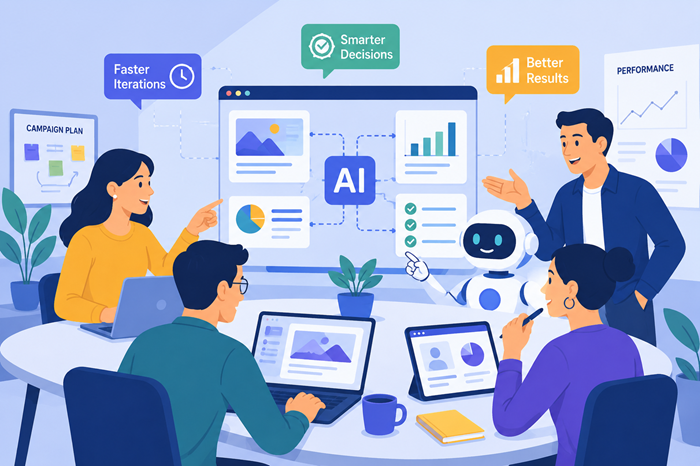
Marketing today is heavily performance-driven. Teams are expected to produce more campaigns, test more ideas, and move faster than ever.
That pressure is pushing organizations toward AI-supported systems that reduce production bottlenecks.
Modern vibe-coding tools simplify the process by helping non-technical users create interfaces, layouts, and workflows without deep engineering knowledge.
This democratization allows marketers to take greater ownership of experimentation.
Improving Customer-Centric Service Design
The best services solve real customer problems. Rapid prototyping allows businesses to gather audience reactions much earlier in the process.
Instead of relying only on internal brainstorming, teams can test actual user behavior.
This creates better alignment between customer expectations and final service offerings.
Companies focused on building customer loyalty often use iterative testing methods because customer engagement improves when services evolve based on real feedback.
The Connection Between SEO and AI Validation
Search visibility still plays a major role in service growth. Validating content ideas early can improve long-term organic performance.
Testing landing pages before large-scale rollout helps identify which keywords, messaging angles, and customer pain points generate the most engagement.
That insight becomes valuable for long-term content planning and campaign development.
Businesses investing in professional SEO strategies can use prototype testing to discover high-converting search intent before expanding full campaigns.
AI Prototypes and Creative Testing
Creativity is often difficult to validate objectively. AI-assisted testing provides clearer performance signals by combining rapid production with measurable audience reactions.
This is one reason content marketers increasingly rely on fast iteration systems to evaluate campaign concepts before major launches.
Testing multiple creative directions quickly often leads to stronger campaign performance because teams can identify what resonates earlier.
Understanding Visual Experimentation in Marketing
Visual communication strongly influences conversion rates. Rapid image testing helps marketers evaluate customer reactions without committing to expensive production processes.
That’s also why many teams ask, why might marketers use text-to-image models in the creative process?
The answer is simple: speed, flexibility, and experimentation.
AI-generated visuals allow businesses to test different concepts, moods, layouts, and campaign directions before investing in final creative assets.
This improves decision-making while reducing production waste.
Building Smarter Validation Funnels
Successful validation requires more than just launching a prototype. Teams need a structured process for collecting useful insights.
A strong validation funnel usually includes:
Audience Research
Understanding customer pain points before building anything improves prototype quality significantly.
Fast Mockup Creation
Create a lightweight but realistic experience users can interact with.
Traffic Testing
Drive targeted traffic using ads, email campaigns, or organic search.
Conversion Analysis
Measure behavior carefully to identify genuine interest levels.
Iterative Improvement
Refine messaging, visuals, and offers based on performance data.
This process creates a reliable framework for smarter service launches.
Avoiding Common AI Validation Mistakes
While rapid prototyping offers huge advantages, some teams misuse it by prioritizing speed over clarity.
Here are common mistakes to avoid:
Testing Too Many Variables at Once
Changing headlines, visuals, pricing, and offers simultaneously makes it difficult to identify what influenced results.
Ignoring Audience Fit
Even strong prototypes fail if they target the wrong audience segment.
Overcomplicating the Prototype
Validation pages should stay simple and focused.
Skipping Data Analysis
Rapid testing only works when teams review metrics carefully and act on insights.
How Agencies Benefit From Rapid AI Workflows
Agencies operate in highly competitive environments where efficiency matters.
AI-supported validation helps agencies:
- Pitch concepts faster
- Present ideas visually
- Reduce production timelines
- Improve campaign testing
- Deliver faster iterations to clients
Many teams also combine these systems with scalable service models like unlimited web design to accelerate production capacity without increasing operational complexity.
The Future of AI-Assisted Marketing
The next evolution of marketing will likely focus on rapid experimentation, adaptive personalization, and AI-supported optimization.
Marketers who learn how to validate ideas quickly will gain a major competitive edge because they can respond faster to customer demand.
Rather than replacing creativity, AI enhances execution speed and testing efficiency.
The brands that succeed will be the ones that combine strategic thinking with rapid iteration.
Why Education Still Matters
AI tools simplify execution, but foundational marketing knowledge still matters.
Understanding positioning, customer psychology, funnels, conversion optimization, and analytics remains essential.
Resources covering 10 online marketing terms can help newer teams build stronger strategic foundations before diving into AI-powered workflows.
Technology works best when paired with strong marketing fundamentals.
Final Thoughts
AI-assisted prototyping is changing how marketers launch and validate service ideas. Faster experimentation allows businesses to reduce risk, improve customer alignment, and make smarter investment decisions.
Instead of waiting months to discover whether an idea works, teams can gather actionable insights within days.
That shift is transforming marketing workflows across agencies, startups, and growing brands.
Businesses that embrace rapid validation will likely move faster, learn faster, and scale more effectively in increasingly competitive markets.
FAQs
What is vibe coding?
Vibe coding is the process of using AI tools and prompts to rapidly create and test digital concepts without traditional development workflows.
Why are AI prototypes useful for marketers?
They help marketers validate ideas quickly before investing large budgets into full production.
Can small businesses use AI-assisted prototyping?
Yes, small businesses can use affordable AI tools to test services, landing pages, and campaign ideas efficiently.
Does AI prototyping improve marketing ROI?
It can improve ROI by reducing wasted spending on unvalidated ideas and accelerating optimization.
Are AI-generated landing pages good for testing?
Yes, they are highly effective for measuring audience interest, engagement, and conversion behavior quickly.