
 July 20, 2026
Building an online store is about more than choosing a theme, adding products, and connecting a payment gateway. Businesses now need a fast, flexible, search-friendly website that can deliver a smooth shopping experience across devices.
That is why the cost of WordPress ecommerce development depends on more than design alone. The final investment can be influenced by custom functionality, product complexity, integrations, SEO structure, performance requirements, and ongoing support.
This guide explains what affects custom WordPress ecommerce development cost and why building speed optimization into the project from the beginning can deliver better long-term value.
What Is Custom WordPress Ecommerce Development?
WordPress ecommerce development involves creating an online store using WordPress and an ecommerce platform such as WooCommerce. A basic store can be launched with a pre-built theme, but custom development gives businesses much greater control.
A custom website can be designed around the brand, products, customers, and business processes. This may include custom product pages, advanced filtering, specialized checkout flows, product variations, customer accounts, subscriptions, and third-party integrations.
The total cost of WordPress ecommerce development depends largely on how much of the website must be customized. A simple store with standard products requires less work than a large ecommerce website with complex inventory, shipping, payment, and automation requirements.
Why Built-In Speed Optimization Matters
Website speed has a direct impact on the ecommerce experience. Customers expect pages to load quickly, product information to appear without unnecessary delays, and interactive elements to respond smoothly.
A slow website can increase frustration and create problems throughout the buying journey. Visitors may leave before viewing products, abandon their carts, or lose confidence in the brand.
For this reason, performance should be considered during planning, design, and development instead of being treated as a final technical task.
Performance Starts With the Website Architecture
Excessive plugins, inefficient code, large media files, and poorly optimized database queries can all contribute to a slow store.
A performance-focused development process addresses these issues early. A leaner codebase, carefully selected plugins, optimized assets, and efficient database structures can create a stronger technical foundation.
This can also reduce the need for expensive performance repairs after launch.
Design and Speed Should Work Together
A visually impressive ecommerce website does not have to be slow. The key is to balance visual quality with technical efficiency.
Large images, unnecessary animations, excessive scripts, and poorly optimized third-party tools can all affect performance. Businesses comparing seo-friendly layout costs should consider how design decisions affect both search visibility and user experience.
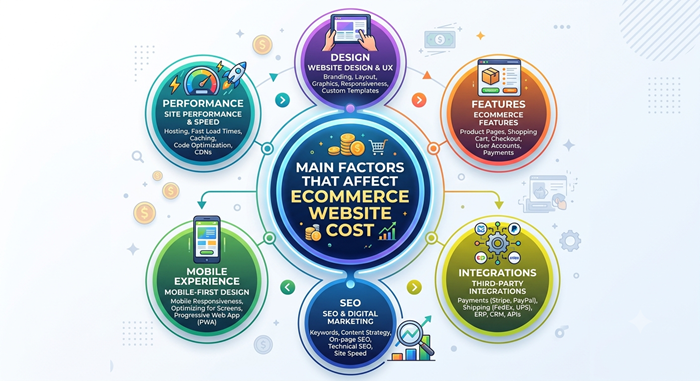
Main Factors That Affect Ecommerce Website Cost
There is no universal price for a custom online store. The scope of the project determines the investment.
Custom Design Requirements
A store using a standard theme usually costs less than one with a completely custom interface.
Custom design may include unique homepages, category pages, product templates, landing pages, checkout experiences, and mobile layouts. The more pages and user journeys that require individual design decisions, the more development time is required.
For brands competing in crowded markets, a custom interface can provide stronger control over branding, product presentation, and the customer experience.
Product Catalog Complexity
A store selling a small number of simple products is relatively straightforward to build.
The project becomes more complex when products include multiple sizes, colors, configurations, bundles, subscriptions, digital downloads, or customer-specific pricing.
Large catalogs may also require advanced search, filtering, bulk product imports, inventory synchronization, and structured product data.
Ecommerce Features and Integrations
Payment gateways, shipping providers, tax systems, CRM platforms, email marketing tools, accounting software, and inventory systems can all affect the final cost.
Each integration creates additional development and testing requirements. Custom APIs and unusual business rules may require additional technical work.
This is why WordPress ecommerce development should be planned around the complete business workflow rather than only the visible website.
SEO and Content Structure
Search optimization should be considered during the planning stage.
A strong ecommerce structure may include organized categories, optimized product URLs, metadata, internal linking, structured data, image optimization, and a clear content hierarchy.
Businesses researching the best ecommerce platforms for seo should also consider the quality of the final implementation. The platform alone does not guarantee strong search performance.
Mobile Experience
Many ecommerce visitors browse and purchase through mobile devices. A store that works well on desktop but feels difficult to use on a smartphone can lose valuable sales.
Mobile development may require different navigation patterns, spacing, product galleries, filters, buttons, and checkout interactions.
Responsive design should therefore be planned from the beginning rather than added as a final adjustment.
How Speed Optimization Adds Long-Term Value
The cost of WordPress ecommerce development may increase when performance work is included from the beginning, but the long-term value can also be greater.
When performance is considered during the initial build, developers can avoid many problems associated with retrofitting speed improvements later.
Early Optimization Can Reduce Rework
Fixing performance issues after launch may require changes to themes, plugins, images, scripts, databases, and hosting configurations.
If performance is considered early, developers can make better technical decisions before the website becomes difficult to change.
This can reduce redevelopment costs and create a more stable launch process.
Businesses planning a performance-focused project can also explore strategies to improve INP for WordPress to better understand how website responsiveness affects user experience.
Core Web Vitals and User Experience
Modern ecommerce performance is not only about how quickly a page loads. Customers also expect pages to become useful quickly and respond smoothly when they interact with menus, filters, buttons, and forms.
Performance work may include image compression, caching, script management, database optimization, hosting configuration, and code improvements.
These improvements can contribute to a smoother experience and help create a more reliable foundation for future growth.
Understanding Development Pricing Models
The way a development team charges can significantly affect the final budget.
Some providers use fixed project pricing. Others charge hourly rates, monthly retainers, or subscription-style arrangements.
A typical web design rate can vary depending on the developer’s experience, location, technical expertise, and the complexity of the project.
Similarly, website design cost per hour is not always a useful comparison because two developers may work at different speeds or provide very different levels of strategic and technical support.
Businesses should compare the overall value of the service rather than focusing only on the hourly figure.
When Ongoing Development Support Makes Sense
Some ecommerce businesses need continuous improvements rather than a one-time launch.
They may require new landing pages, product updates, design changes, bug fixes, performance work, and ongoing feature development.
In these situations, unlimited WordPress development can offer a more flexible way to manage recurring work. Instead of starting a new project for every small improvement, businesses can maintain an ongoing development relationship.
For companies with regular design and development needs, unlimited web design can also support continuous creative and technical improvements.
A store is rarely completely finished after launch. Real customer behavior often reveals new opportunities to improve navigation, product pages, checkout flows, and conversion paths.
This is why why growing agencies are embracing unlimited wordpress support has become an important consideration for businesses managing multiple websites or frequent updates.
Fixed Projects vs. Ongoing Retainers
Fixed-price development works well when the project scope is clearly defined.
For example, a business may need a new store with a specific number of templates, integrations, and features. In this situation, a project-based quote can make budgeting easier.
An ongoing retainer may be more suitable when requirements are expected to change. Businesses can continue improving the website as new priorities emerge.
Companies that need specialized technical support may also benefit from unlimited wordpress expert retainers, especially when their ecommerce website is an important part of daily operations.
How to Estimate the Total Investment
A practical estimate should begin with the project scope rather than a generic industry average.
Consider the following:
- Number of page templates
- Product catalog size and complexity
- Custom functionality
- Third-party integrations
- Payment and shipping requirements
- Content migration
- SEO requirements
- Performance goals
- Mobile experience
- Ongoing support needs
Once these factors are defined, it becomes easier to compare development proposals accurately.
A lower initial quote may not represent better value if it excludes performance work, testing, content migration, documentation, or post-launch support.
Final Thoughts
The cost of WordPress ecommerce development depends on your store’s design, features, integrations, performance needs, and future goals.
A custom website with built-in speed optimization may require a higher initial investment, but it can deliver better performance, flexibility, and long-term scalability. By planning SEO, usability, and performance from the beginning, businesses can build an ecommerce website that supports sustainable growth.
Frequently Asked Questions
1. How much does custom ecommerce development cost?
The cost depends on design complexity, features, integrations, product volume, performance requirements, and ongoing support.
2. Is custom ecommerce development better than using a ready-made theme?
Custom development offers greater control over branding, functionality, scalability, and performance.
3. Should speed optimization be included during development?
Yes. Building performance into the project from the beginning can reduce rework and improve user experience.
4. Is WordPress suitable for a growing ecommerce business?
Yes. With the right architecture, hosting, development, and maintenance, WordPress can support growing online stores.
5. Should businesses choose fixed-price development or ongoing support?
Fixed pricing suits clearly defined projects, while ongoing support works well for businesses with changing requirements.