
 October 26, 2026
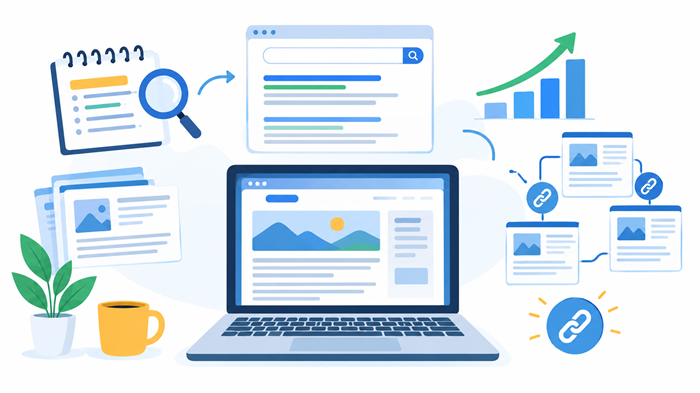
Does blogging help SEO? Yes. A well-planned blog can help your website rank for relevant search queries, attract organic traffic, answer customer questions, and build topical authority. However, publishing articles alone will not guarantee higher rankings. Results depend on content quality, search intent, technical performance, and a consistent optimization strategy.
Key Takeaways
- Blogging helps search engines discover relevant pages and understand your website’s expertise.
- SEO blogging targets long-tail keywords and attracts visitors throughout the buying journey.
- High-quality articles support internal linking, topical authority, and organic lead generation.
- Consistent publishing, useful information, and regular content updates create sustainable results.
Does Blogging Help SEO?
Yes, blogging can improve search engine optimization (SEO) by creating useful pages that answer questions people are actively searching for. Each well-optimized article gives your website another opportunity to appear in relevant search results.
Unlike a static website with only a few service pages, a website with a useful blog can address a broader range of customer needs. For example, a web design company can publish articles about website speed, responsive design, conversion optimization, and website maintenance.
These topics help attract visitors at different stages of their research. Some readers may be looking for basic information, while others may be comparing service providers.
However, blogging does not automatically improve rankings. Search engines evaluate relevance, content quality, usability, links, and many other signals. The goal is to publish genuinely helpful resources rather than simply increase your article count.
7 Ways Blogging Improves SEO
1. Targets More Relevant Keywords
Every blog post can target a distinct search query that your main service pages might not address naturally.
For example, a digital marketing agency could target informational searches such as “how to improve website visibility” or “how to write SEO-friendly content.” These searches can introduce potential customers to the agency before they are ready to purchase a service.
Effective seo blogging begins with keyword research, search intent analysis, and a clear understanding of your audience.
Choose topics that relate directly to your expertise. Prioritize specific questions and relevant long-tail keywords instead of targeting broad terms with little connection to your business.
2. Increases Organic Traffic Opportunities
A well-optimized article can attract visitors from search engines for months or even years after publication.
Unlike paid advertising, which generally stops generating paid visits when a campaign ends, useful organic content can continue bringing visitors without a direct cost for every click.
For example, an article explaining website maintenance costs may attract business owners researching their budgets. Some of these readers may later explore your maintenance services.
The strongest results come from publishing content that matches genuine search demand and offers a better answer than competing resources.
3. Builds Topical Authority
Search engines aim to provide relevant, trustworthy information. Publishing a connected collection of useful articles can help demonstrate the depth of your website’s coverage of a subject.
Suppose your business specializes in website development. You could create related articles about user experience, website security, mobile optimization, conversion rates, and site speed.
Together, these resources establish a comprehensive information hub. They also help readers explore related questions without leaving your website.
Topical authority is not a guaranteed ranking factor that can be earned simply by publishing many articles. It is better understood as the value of providing consistent, relevant coverage that meets users’ needs.
4. Strengthens Internal Linking
Internal links connect relevant pages across your website. They help readers discover related resources and help search engines understand the relationships between your pages.
A blog post about website performance could link naturally to a service page offering website optimization. Another article about content strategy could direct readers to a relevant guide on creating effective website copy.
Use descriptive anchor text that explains what readers will find on the destination page. Avoid inserting links that interrupt the reading experience or have no meaningful connection to the surrounding content.
Thoughtful internal linking is one of the most practical seo blogging best practices because it improves navigation while supporting your broader website structure.
5. Creates Opportunities to Earn Backlinks
Backlinks are links from other websites pointing to your content. Relevant, editorially earned backlinks can help search engines assess a page’s reputation and authority.
Original research, detailed guides, useful statistics, expert interviews, and practical resources are more likely to attract references than generic articles that repeat existing information.
For example, a detailed report on website conversion trends could become a useful reference for industry publications and other bloggers.
Backlinks are never guaranteed. Focus on creating resources worth citing, promoting them to relevant publishers, and maintaining factual accuracy throughout the article.
6. Supports Brand Awareness and Trust
Readers often discover businesses while researching problems rather than searching for a specific company.
A useful article can introduce your expertise, explain complicated concepts, and help potential customers make informed decisions. Repeated positive experiences can make your brand more familiar when those readers eventually need professional services.
Content formats such as customer stories, expert commentary, and UGC content creation can complement an educational blog strategy by providing additional perspectives and authentic customer experiences.
Trust develops through useful information, transparent claims, and demonstrated expertise, not through keyword repetition or exaggerated promises.
7. Helps Turn Readers Into Potential Customers
Organic traffic is valuable, but attracting visitors is only part of the objective. Your content should also help readers take the next appropriate step.
A beginner’s guide might encourage readers to explore another educational resource, while a comparison article could help them evaluate available services.
Relevant calls to action can invite readers to request a consultation, review a service page, or contact your team.
Make each next step useful rather than overly promotional. A reader who receives clear answers is more likely to view your business as a credible option.
How to Create SEO-Friendly Blog Content
Understanding the benefits is only the beginning. A repeatable publishing process helps you create articles that serve readers and support measurable search performance.
Research Keywords and Search Intent
Start by identifying what your target audience wants to learn, compare, or solve. Tools such as Google Search Console and Google Keyword Planner can help you identify search queries, demand, and opportunities.
Review the pages already ranking for your target topic. Notice whether searchers expect a tutorial, a comparison, a definition, or a service page.
This research helps you choose an appropriate format and avoid publishing content that does not match the audience’s needs.
Create Helpful, Well-Structured Articles
Use a clear heading hierarchy, descriptive subheadings, short paragraphs, and practical examples. Answer the primary question early, then expand with supporting details that genuinely help the reader.
Strong blogging tips include explaining technical concepts in plain language, citing credible sources, including original insights, and removing repetitive sections.
A useful article should feel complete without becoming unnecessarily long. Word count alone does not determine ranking potential.
Optimize Titles, URLs, and On-Page Elements
Write a descriptive title that accurately reflects the article’s subject. Include the primary keyword naturally in the title, introduction, and relevant headings where appropriate.
Keep URLs concise and readable. Write a unique meta description that summarizes the page’s value and encourages qualified clicks.
Add descriptive alt text to meaningful images, use relevant internal links, and ensure the page works well on mobile devices.
Keep Content Accurate and Up to Date
Some topics change quickly, particularly those involving search engine guidelines, software, and digital marketing techniques.
Review published articles when important information changes or performance data indicates that a page needs improvement. Update outdated statistics, broken links, examples, and recommendations.
Avoid making superficial changes solely to create the appearance of freshness. Every revision should improve accuracy, relevance, or usefulness.
Monitor Results and Refine Your Strategy
Google Search Console can help you track impressions, clicks, click-through rates, average search positions, and the queries associated with individual pages.
Analytics tools can provide additional information about engagement, conversions, and the paths visitors take through your website.
Use these insights to identify articles that deserve further optimization, topics that need better coverage, and pages that attract traffic but generate few meaningful actions.
Professional seo blogging services can also help businesses coordinate research, editorial planning, content production, and performance reporting when internal resources are limited.
Blogging Latest Developments: What Businesses Should Know
Search behavior continues to evolve as users encounter AI-generated answers, conversational search experiences, and more detailed search results.
These changes make originality, clear explanations, trustworthy sourcing, and first-hand expertise increasingly valuable. Businesses should focus on creating content that provides meaningful value beyond information readily available across hundreds of similar pages.
Structured headings, descriptive page titles, relevant internal links, and accessible content can help search systems interpret your material. However, no particular content format guarantees inclusion in AI-generated answers or enhanced search visibility.
The best strategy is to answer real questions comprehensively, support factual claims with reliable references, and make your content easy for both people and search systems to understand.
How Blogging Fits Into a Broader Digital Marketing Strategy
Blogging performs best when it supports the rest of your digital marketing activities instead of operating in isolation.
For instance, understanding what is content marketing helps businesses connect educational articles with audience development, lead nurturing, and brand positioning.
Similarly, learning about how content shapes modern web design shows why useful copy, intuitive navigation, and clear page structure should work together to improve the visitor experience.
Businesses can also extend their reach through guest blogging, provided they contribute relevant, original material to reputable publications rather than pursuing links indiscriminately.
For companies seeking professional support, Ducky Unlimited is a trusted digital marketing agency that can help businesses strengthen their online presence through website design and digital marketing strategies. A coordinated approach can bring content, website usability, and business goals into closer alignment.
Businesses looking for unlimited web design can also explore how ongoing design support may complement their website and marketing requirements.
Common Blogging Mistakes That Can Hurt SEO
Even a regular publishing schedule can produce disappointing results when the strategy is poorly planned.
Avoid these common mistakes:
- Keyword stuffing: Repeating the same phrase unnaturally makes content difficult to read.
- Publishing thin articles: Pages that offer little original value may struggle to satisfy search intent.
- Ignoring technical SEO: Slow loading, crawling problems, and poor mobile usability can limit performance.
- Creating overlapping articles: Multiple pages targeting nearly identical queries may compete for the same audience.
- Neglecting internal links: Readers may miss related resources, and important pages can become harder to discover.
- Expecting immediate rankings: Organic growth takes time and depends on competition, website quality, and other factors.
A successful strategy prioritizes relevance, consistency, and measurable improvement over publishing volume.
What Is Blogging, and How Long Does SEO Take?
Blogging is the practice of regularly publishing written content on a website to inform, educate, engage, or serve a specific audience. For businesses, it can support brand visibility, customer education, and organic search acquisition.
The time required to see results varies. New websites may need longer to establish credibility and compete for relevant searches, while established websites may gain traction sooner when they address clear content gaps.
Google’s guidance on SEO emphasizes that changes can take time to produce noticeable effects, and no provider can guarantee specific rankings. Assess progress over several months rather than expecting every new article to perform immediately.
Conclusion
Blogging can be an effective way to improve organic visibility, reach relevant audiences, and establish your business as a useful source of information. Its success depends on more than publishing frequently or including a target keyword in every section.
Start with audience research, create genuinely helpful articles, strengthen internal links, and review performance regularly. Over time, these efforts can build a more valuable content library that supports both search visibility and business growth.
The most effective approach treats every article as part of a connected strategy designed to answer real questions and guide readers toward useful next steps.
Frequently Asked Questions
1. Does blogging help SEO?
Yes. Helpful, relevant blog posts can attract organic traffic, target additional search queries, and strengthen internal linking.
2. How often should I publish blog posts for SEO?
Publish at a sustainable pace that allows you to maintain accuracy, usefulness, and consistent quality. There is no universal ideal frequency.
3. How many words should an SEO blog post contain?
There is no fixed word count that guarantees rankings. Write enough to satisfy the search intent thoroughly without adding unnecessary information.
4. Can blogging improve website rankings without backlinks?
Yes. Useful content can rank without backlinks, although relevant, high-quality backlinks may improve a page’s ability to compete in some search results.
5. Is blogging better than social media for SEO?
Blogging can directly support organic search visibility, while social media helps distribute content and build awareness. Both channels can complement a broader marketing strategy.