
 July 17, 2026
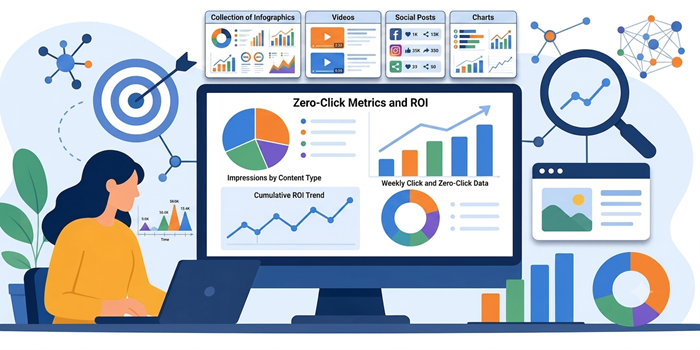
Measuring the true value of your marketing efforts has become more challenging than ever. As search engines, social media platforms, and AI-powered experiences increasingly answer users’ questions without requiring a click, traditional analytics no longer tell the complete story. Businesses that rely only on website traffic may overlook meaningful engagement happening directly on search results pages, social feeds, and other digital touchpoints.
Understanding measure content marketing ROI today requires looking beyond pageviews and conversions. It involves evaluating how your visual materials influence audience behavior, strengthen brand visibility, and contribute to business goals—even when users never visit your website. By combining engagement data with modern measurement techniques, marketers can build a clearer picture of campaign performance and make smarter decisions backed by real insights.
Why Traditional ROI Measurement No Longer Tells the Full Story
For years, marketers measured success using clicks, sessions, bounce rates, and direct conversions. While these metrics remain valuable, they only capture part of the customer journey.
Today’s audiences often consume information directly from:
- Featured snippets
- AI-generated search summaries
- Social media posts
- Image carousels
- Video previews
- Knowledge panels
A user may recognize your brand, save your infographic, share your carousel, or remember your message without ever clicking your website.
This shift means businesses need a broader framework to measure content marketing ROI effectively.
Understanding Zero-Click Engagement
A zero-click interaction occurs when users receive the information they need without visiting your website.
Examples include:
- Reading a Google featured snippet
- Viewing an infographic on social media
- Saving an Instagram carousel
- Watching a LinkedIn video preview
- Reading an AI-generated summary referencing your content
These interactions still build trust and influence future purchasing decisions, making them valuable indicators of marketing success.
This is why many modern marketing strategies now evaluate visibility and engagement alongside website conversions.
The Role of Visual Assets in Modern ROI
Images, illustrations, videos, infographics, charts, and presentation graphics often generate stronger engagement than plain text.
Well-designed visual assets help people:
- Understand complex information faster
- Remember your brand longer
- Share your content more frequently
- Spend more time engaging with your message
When trying to measure content marketing ROI, visuals provide measurable engagement signals that extend well beyond clicks.
Common Visual Formats Worth Tracking
Some of the highest-performing visual formats include:
- Infographics
- Comparison charts
- Animated explainers
- Data visualizations
- Social media carousels
- Short-form videos
- Interactive graphics
Each format creates multiple engagement opportunities across various channels.
Key Metrics That Actually Matter
Rather than focusing exclusively on traffic, consider measuring a combination of visibility, engagement, and business outcomes.
1. Impressions
Impressions reveal how many people saw your content, whether or not they clicked.
Increasing impressions often indicate improving brand awareness.
2. Engagement Rate
Track interactions such as:
- Shares
- Saves
- Comments
- Reactions
- Video completion rates
Higher engagement typically reflects stronger audience interest.
3. Branded Search Growth
If people begin searching specifically for your company after seeing your content, your campaigns are influencing awareness.
This is another valuable way to measure content marketing ROI beyond website visits.
4. Assisted Conversions
Not every visitor converts immediately.
Many users interact with multiple pieces of content before purchasing.
Assisted conversion reports reveal how earlier content contributed to later sales.
5. Customer Lifetime Value
Sometimes a single article attracts customers who remain loyal for years.
Long-term customer value often matters more than first-click attribution.
How Visual Content Influences Buying Decisions
People rarely purchase after a single interaction.
Instead, buyers often experience multiple touchpoints before making a decision.
Visual content helps throughout the buying journey by:
- Explaining products
- Building trust
- Demonstrating expertise
- Simplifying technical information
- Increasing brand recall
Because of this influence, marketers should measure content marketing ROI using both direct and indirect performance indicators.
Combining Zero-Click Metrics with Traditional Analytics
The best measurement approach combines classic analytics with newer engagement signals.
A balanced reporting dashboard might include:
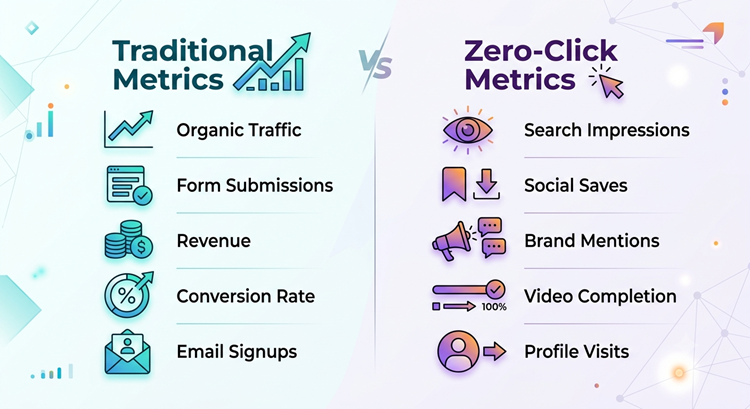
Together, these metrics provide a much more accurate picture of performance.
Build a Practical ROI Framework
A practical framework makes reporting easier and more consistent.
Step 1: Define Business Goals
Start by identifying what success actually means.
Possible objectives include:
- Brand awareness
- Lead generation
- Sales
- Customer retention
- Community growth
Without clear goals, it’s difficult to measure content marketing ROI accurately.
Step 2: Identify Supporting Metrics
Choose metrics aligned with each goal.
For awareness:
- Reach
- Impressions
- Mentions
For lead generation:
- Form fills
- Downloads
- Email subscriptions
For sales:
- Revenue
- Assisted conversions
- Customer acquisition cost
Step 3: Assign Financial Value
Estimate the business value of each action.
Examples include:
- Average lead value
- Average customer value
- Estimated brand exposure
- Cost savings from organic reach
Assigning value helps demonstrate marketing impact in financial terms.
Step 4: Review Performance Regularly
Monthly reporting allows teams to identify trends before small issues become larger problems.
Consistent reviews also help optimize future campaigns.
Tools That Help Measure Performance
Several tools make it easier to measure content marketing ROI.
Popular options include:
- Google Analytics 4
- Google Search Console
- LinkedIn Analytics
- Meta Business Suite
- YouTube Studio
- Looker Studio
- HubSpot
- SEMrush
Combining multiple data sources produces more reliable insights.
Common Mistakes to Avoid
Many businesses unintentionally underestimate marketing performance.
Avoid these common mistakes:
Measuring Only Traffic
Traffic alone doesn’t reflect influence or brand recognition.
Ignoring Assisted Conversions
Content often supports sales without being the final interaction.
Overlooking Visual Engagement
Saved graphics, shared infographics, and watched videos contribute meaningful business value.
Reporting Vanity Metrics
Follower counts mean little unless they connect to real business objectives.
Where Creative Quality Fits Into ROI
Great measurement begins with high-quality creative work.
Strong visuals improve clarity, encourage sharing, and strengthen brand recognition across every channel.
Businesses investing in digital marketing often discover that consistent creative production directly supports stronger campaign performance over time.
If your team produces content regularly, understanding the benefits of flat-rate creative services can help maintain quality while keeping production predictable.
Content Quality Still Drives Long-Term Results
No measurement framework can compensate for weak content.
Helpful, trustworthy resources continue attracting audiences long after publication.
If you’re improving your publishing strategy, understanding what is content marketing provides a strong foundation for creating resources that consistently deliver value.
Modern Testing Improves ROI Faster
Today’s marketing teams can validate ideas much faster than before.
Rapid experimentation allows businesses to improve messaging, creative direction, and campaign performance before making larger investments.
Learning how vibe coding helps marketers test ideas faster can shorten development cycles and support smarter optimization decisions.
Why Design Consistency Matters
Consistent branding strengthens recognition across every customer touchpoint.
Whether users encounter your business through search, social media, or AI-generated summaries, professional design reinforces credibility.
Working with experts in unlimited web design can help businesses maintain a cohesive visual identity that supports long-term growth.
Supporting Product Marketing with Better Measurement
Content performance becomes even more valuable when connected directly to product promotion.
Understanding how to successfully market a product online helps align educational content with revenue-focused campaigns while creating a more complete measurement strategy.
Final Thoughts
The way people discover information continues to evolve, making traditional analytics only one part of the measurement process. Modern marketers must evaluate visibility, engagement, influence, and long-term customer relationships alongside clicks and conversions.
Learning to measure content marketing ROI requires combining traditional website analytics with visual engagement signals and emerging zero-click indicators. Businesses that embrace this broader approach gain deeper insights into campaign effectiveness, make better investment decisions, and build stronger marketing programs that continue delivering value over time.
FAQs
What is Measure Content Marketing ROI?
It is the process of evaluating how content contributes to business goals and revenue.
Why are zero-click metrics important?
They measure visibility and engagement that happen without website visits.
Which visual formats perform best?
Infographics, videos, charts, and carousel posts typically generate strong engagement.
How often should ROI be measured?
Monthly reviews usually provide the best balance between insight and action.
Can zero-click engagement generate sales?
Yes, it increases awareness and trust that often influence future purchasing decisions.