
 April 30, 2026
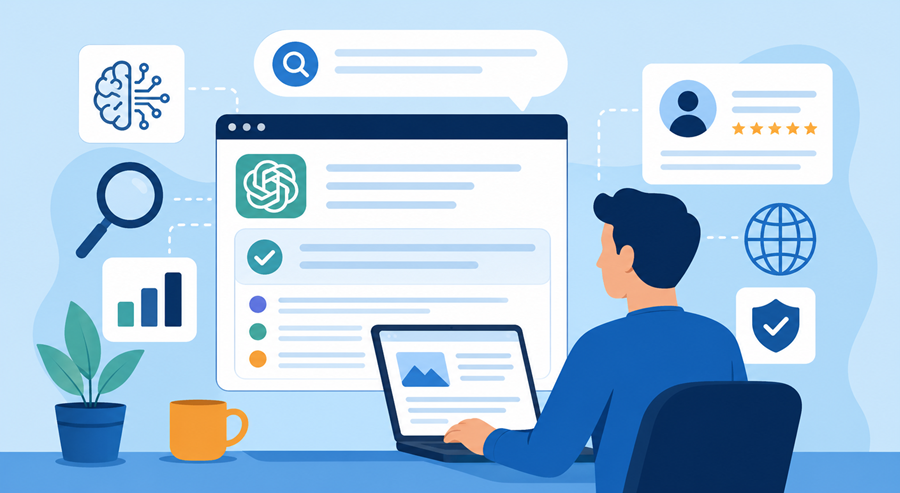
Artificial intelligence is changing how people discover brands online. Instead of scrolling through pages of search results, users now ask tools like ChatGPT, Claude, and Google’s AI-generated search experiences for direct answers. That shift is reshaping digital visibility in a major way.
Traditional search rankings still matter, but businesses now need content that AI systems can understand, summarize, and trust. Brands that adapt early will gain more visibility, authority, and qualified traffic as AI-powered search becomes the standard.
This guide explains how to position your business for the next generation of discovery while still strengthening your overall online presence. Whether you run a local company, an eCommerce store, or a service-based business, optimizing for AI-driven search experiences is quickly becoming essential.
Why AI Search Is Changing Online Visibility
Search behavior has evolved beyond simple keyword matching. AI platforms now analyze context, intent, authority, and user satisfaction before generating answers.
Instead of showing ten blue links, AI systems often summarize information directly within the interface. That means your content must be structured clearly enough to become part of the answer itself.
Businesses relying only on outdated ranking tactics may struggle to stay visible in this new environment. Modern optimization requires credibility, clarity, and content depth.
A strong digital foundation still matters, especially when paired with strategic branding and content architecture. Companies investing in unlimited web design often create cleaner user experiences that support both traditional search engines and AI-based discovery tools.
Understanding How AI Systems Choose Content
AI platforms pull information from multiple trusted sources. They evaluate patterns across websites, reviews, authority signals, and content quality before presenting responses to users.
Content Clarity Matters More Than Ever
AI models favor content that answers questions directly and logically. Pages with clear formatting, descriptive headings, and concise explanations are easier for AI systems to process.
Avoid overly complicated writing. Well-structured content improves both readability and machine comprehension.
Authority Signals Influence AI Recommendations
Search engines and AI assistants prioritize trustworthy sources. Your brand reputation now affects visibility beyond Google rankings alone.
Authority signals include:
- High-quality backlinks
- Expert-driven content
- Consistent brand mentions
- Positive reviews
- Accurate business information
- Strong engagement metrics
Brands that consistently publish useful, reliable content are more likely to appear in AI-generated answers.
Search Intent Is Now Central
AI tools focus heavily on intent rather than exact-match phrases. Your content should answer real customer questions naturally instead of forcing repetitive wording into paragraphs.
That means creating educational resources, FAQs, comparison pages, and practical guides that solve genuine problems.
Build Content Around Questions People Actually Ask
One of the best ways to improve AI visibility is to create content that mirrors real conversations.
AI platforms are built around natural language. Users ask complete questions instead of typing fragmented keywords.
For example, someone may ask:
- “What’s the best strategy for local brand visibility?”
- “How can small businesses appear in AI search answers?”
- “Why are AI summaries affecting website traffic?”
Your content should directly address these kinds of questions.
Use Conversational Headings
Natural headings improve readability and help AI systems understand page structure.
Examples include:
- How does AI search work?
- Why does authority matter in AI rankings?
- What content performs best in AI-generated answers?
This conversational approach aligns closely with how users interact with modern AI systems.
Technical Optimization Still Plays a Huge Role
Even the best content can struggle if your website has technical issues.
Fast-loading pages, mobile responsiveness, clean navigation, and structured data all contribute to stronger visibility.
Businesses investing in mobile first web design are often better positioned for AI-driven experiences because modern systems prioritize usability across devices.
Improve Crawlability
AI systems still rely heavily on searchable web infrastructure. Make sure your site:
- Uses clean URLs
- Has proper internal linking
- Includes XML sitemaps
- Avoids broken pages
- Uses descriptive metadata
The easier your content is to access and understand, the more likely it can be referenced in AI-generated results.
Structured Data Helps Context
Schema markup helps search engines interpret your content more accurately.
Use structured data for:
- FAQs
- Reviews
- Products
- Articles
- Local businesses
- Services
This improves the chances of your information appearing in enhanced search experiences and AI summaries.
Brand Authority Is Becoming a Ranking Factor Everywhere
AI-generated responses rely heavily on trusted sources. If your brand lacks authority signals, your visibility may decline even if your site previously ranked well.
Publish Expert-Level Content
Generic blog posts no longer stand out. AI systems prioritize original insights, useful explanations, and clear expertise.
Focus on:
- Industry guides
- Detailed tutorials
- Data-backed insights
- Unique case studies
- Thought leadership content
High-value content creates stronger trust signals over time.
Keep Brand Messaging Consistent
AI tools compare information across platforms. Inconsistent messaging can weaken trust.
Ensure consistency across:
- Website copy
- Social profiles
- Directory listings
- Review platforms
- Blog content
A unified digital identity strengthens brand recognition across AI systems.
User Experience Now Impacts AI Visibility
Search engines increasingly measure how users interact with your content.
If visitors leave quickly, struggle to navigate, or fail to find answers, your visibility may decline over time.
Good user experience improves:
- Time on site
- Engagement
- Conversions
- Trust signals
- Search performance
This is where the relationship between SEO and design becomes especially important. Strong visual structure and strategic optimization work together to improve discoverability and user satisfaction.
The Growing Role of AI-Friendly Content Formats
Different content formats can improve how AI systems interpret and surface your information.
FAQ Sections
FAQ blocks help answer highly specific queries clearly and efficiently.
AI tools frequently pull concise answers from FAQ content because the structure is easy to interpret.
Lists and Step-by-Step Guides
Well-organized lists make information easier to summarize. Guides with logical progression often perform better in AI-generated responses.
Definitions and Explanations
Clear explanations increase the likelihood that AI systems will reference your content for informational queries.
Simple, direct wording usually performs best.
Local Businesses Need AI Optimization Too
AI-driven search is not only affecting national brands. Local businesses are also competing for visibility inside AI-generated recommendations.
Location relevance, reviews, and reputation all matter.
Local optimization strategies should include:
- Updated Google Business profiles
- Accurate contact details
- Localized content
- Community mentions
- Customer reviews
These signals help AI systems identify trusted regional businesses.
Content Freshness Is Increasingly Important
AI systems prefer current and relevant information.
Outdated statistics, expired advice, and neglected pages reduce trust.
To stay competitive:
- Update articles regularly
- Refresh outdated screenshots
- Improve old content
- Add new insights
- Expand thin pages
Consistent updates signal reliability and expertise.
Why Traditional Optimization Alone Is No Longer Enough
Ranking on Google is still valuable, but visibility now extends beyond traditional search pages.
Modern businesses need strategies that support:
- AI-generated summaries
- Conversational search
- Voice assistants
- Semantic search systems
- Knowledge panels
This broader approach helps future-proof your brand as search technology continues evolving.
Many businesses now combine content strategy with advanced seo services to improve both organic rankings and AI discoverability simultaneously.
Brands using unlimited seo services often focus on long-term authority building instead of chasing short-term ranking tricks.
Common Mistakes Brands Should Avoid
Publishing Thin Content
Short, shallow articles rarely perform well in AI-driven search environments.
Depth, clarity, and usefulness matter far more today.
Ignoring User Intent
Creating content only for algorithms often leads to poor engagement.
Always focus on solving real customer questions.
Overusing Keywords
Keyword stuffing damages readability and reduces trust.
Natural language works far better in modern search systems.
Neglecting Site Performance
Slow, cluttered websites create poor experiences that hurt visibility over time.
Performance optimization remains essential.
The Future of Search Is More Conversational
AI-powered discovery will continue expanding across search engines, browsers, apps, and smart assistants.
Businesses that adapt now can establish stronger authority before competition intensifies further.
The goal is no longer just ranking pages. It’s becoming a trusted source that AI systems confidently reference and recommend.
Companies investing early in smarter content strategies, better technical performance, and stronger authority signals will have a major advantage in the coming years.
The rise of conversational AI is not replacing search optimization — it’s redefining it.
Final Thoughts
AI-driven search experiences are transforming how consumers discover brands online. Visibility now depends on more than rankings alone. Trust, clarity, authority, and usability all play critical roles in whether your content gets surfaced in AI-generated answers.
Businesses that create genuinely useful content, maintain strong technical performance, and build recognizable authority will be best positioned for the future of online discovery.
Adapting now gives your brand a significant competitive edge as AI-powered search continues evolving across the digital landscape.
FAQs
What is AI search optimization?
AI search optimization helps content appear in AI-generated answers and conversational search experiences.
Why does content structure matter for AI visibility?
Clear formatting helps AI systems understand and summarize your information more accurately.
Can small businesses benefit from AI optimization?
Yes, local and small businesses can improve visibility through authority and content quality.
Does traditional SEO still matter?
Yes, traditional optimization remains important alongside AI-focused strategies.
How often should website content be updated?
Review and refresh important pages every few months to maintain relevance and accuracy.