
 August 31, 2026
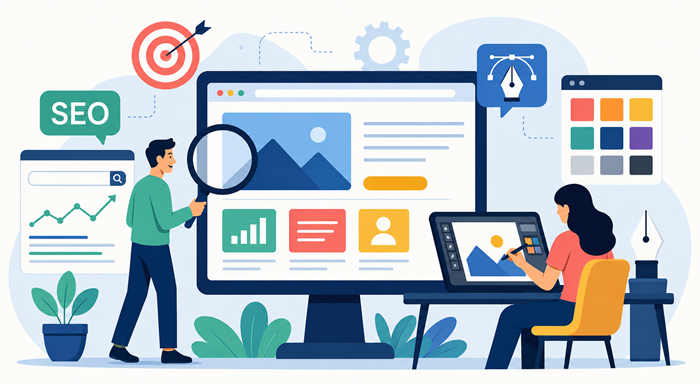
A strong website needs more than useful information to perform well in search. It also needs to communicate clearly, create a positive first impression, and make it easy for visitors to find and understand what they need. This is where seo and graphic design work together. Visual choices influence how people interact with a page, while search optimization helps the right audience discover it. When both are planned together, businesses can create websites that attract visitors, hold their attention, and support long-term organic growth.
Key Takeaways
- seo and graphic design can work together to create a clearer and more engaging website experience.
- Well-planned visuals can support readability, navigation, accessibility, and conversions.
- Design decisions can indirectly strengthen several important search performance signals.
- Combining creative and search-focused thinking creates a more consistent digital experience.
Why SEO and Graphic Design Should Work Together
Search optimization and visual communication were once treated as separate areas of digital marketing. Today, that approach can leave gaps in the customer journey.
A search result may bring someone to a website, but the design determines what happens next. If the page looks confusing, feels outdated, or makes important information difficult to find, visitors may leave before taking action.
This is why seo and graphic design should be considered complementary parts of website development. One helps bring qualified traffic to a page, while the other helps communicate value once visitors arrive.
Good visual structure can make content easier to scan. Clear headings, balanced spacing, useful graphics, and intuitive navigation help visitors understand a page without unnecessary effort.
How Visual Design Influences Search Performance
Search engines increasingly evaluate websites based on the experience they provide. While visual appearance itself is not simply a ranking factor, the effects of thoughtful design can influence behaviors and technical elements that matter for organic performance.
Better Readability Encourages Engagement
Large blocks of text can make even excellent content difficult to consume. Strategic use of headings, lists, spacing, images, and visual breaks makes information easier to scan.
When visitors can quickly identify relevant information, they are more likely to continue exploring the website. This can improve user engagement and create a smoother path toward conversion.
The relationship between seo and graphic design becomes especially valuable on informational pages where visitors need to understand complex subjects before making a decision.
Stronger Visual Hierarchy Improves Navigation
A website should guide visitors naturally from one section to the next. Visual hierarchy helps establish which elements deserve attention first.
For example, a clear headline should stand out from supporting copy, while calls to action should be easy to identify without overwhelming the page.
Consistent typography, spacing, buttons, and page sections make the interface more predictable. Visitors spend less time figuring out how a page works and more time consuming its content.
Design and Website Loading Speed
A visually impressive website can still perform poorly if it takes too long to load.
Large images, unnecessary animations, oversized files, and poorly optimized design assets can increase page weight. Slow pages can create frustration, particularly for visitors browsing on mobile connections.
That is why website loading speed should be considered during the design process rather than addressed only after a website has been built.
Image compression, responsive formats, efficient code, and careful asset selection can help preserve visual quality without creating unnecessary technical overhead.
For a deeper look at the connection between performance and search visibility, explore why site speed matters.
The goal is not to remove visual elements simply to make a page faster. Instead, designers and developers should decide which assets genuinely improve communication and optimize them accordingly.
Creating Search-Friendly Visual Content
Images can make an article, service page, or landing page more useful, but they should have a clear purpose.
A relevant visual can explain a process, demonstrate a product, illustrate a concept, or break up a long section of content. Decorative graphics, on the other hand, should not overwhelm the information visitors came to find.
Effective seo and graphic design planning considers both the human viewer and the technical requirements surrounding visual content.
Use Descriptive Image Information
Search engines cannot interpret every visual in the same way a person can. Descriptive alternative text can provide useful context for images when appropriate.
Alt text should explain the image’s purpose rather than stuff keywords into an otherwise unnatural description.
For example, an image showing a website dashboard might use descriptive wording that identifies what the visitor is seeing and why the image is relevant to the surrounding content.
Choose Images That Support the Topic
Every major visual should contribute something to the page.
A relevant infographic can simplify a complicated process. A product image can demonstrate features. A diagram can explain relationships that would take several paragraphs to describe.
These applications demonstrate how seo and graphic design can reinforce one another without making content feel artificially optimized.
Branding Consistency Builds Trust
Visitors often form an opinion about a business within seconds of reaching its website.
Consistent branding can make a business appear established, professional, and trustworthy. Colors, typography, imagery, layouts, and visual patterns should work together rather than appearing to come from unrelated sources.
A consistent visual identity also makes it easier for returning visitors to recognize a company across different pages and digital channels.
Businesses exploring professional unlimited web design can use consistent design systems to create a more unified experience across their online presence.
How Graphic Design Supports Content Marketing
Content marketing depends heavily on presentation.
Even a well-researched article can struggle to hold attention if it is difficult to read. Visual elements can transform complex information into formats that are easier to understand and share.
This includes infographics, charts, illustrations, comparison visuals, screenshots, diagrams, and branded social media assets.
Businesses can also use graphic design services to create reusable visual systems for blogs, landing pages, campaigns, and promotional content.
The strongest seo and graphic design strategies treat visuals as part of the content rather than as decoration added at the final stage.
Staying Current Without Chasing Every Trend
Design trends can influence how modern a website feels, but following every new trend is rarely a good strategy.
A better approach is to understand which visual approaches improve clarity, usability, and brand recognition.
For businesses reviewing current creative directions, this guide to logo design trending in 2026 offers useful inspiration for maintaining a contemporary identity.
Trendy design should support the brand rather than replace it. A website should still be recognizable and usable after the trend has passed.
The Rise of Simpler Visual Experiences
Modern websites increasingly favor clean interfaces, restrained visual systems, and purposeful layouts.
This does not mean every page should look identical. Instead, it means unnecessary visual complexity is removed so important information can receive more attention.
Understanding why neo-minimalism graphics are dominating can help businesses think about how simplicity can improve both presentation and usability.
For seo and graphic design, simplicity can be particularly valuable because a clear interface allows visitors to find content and complete actions with fewer distractions.
Choosing the Right Creative Workflow
Producing fresh visual assets for an ongoing content strategy can require considerable time.
Businesses publishing frequently may need blog graphics, social media visuals, landing page assets, advertisements, presentation materials, and branded illustrations on a regular basis.
An unlimited graphic design subscription can be one approach for organizations that need a consistent flow of creative work without treating every individual asset as a separate project.
The most effective workflow connects content planning with design planning. When writers, marketers, designers, and developers understand the same objectives, the final website becomes more cohesive.
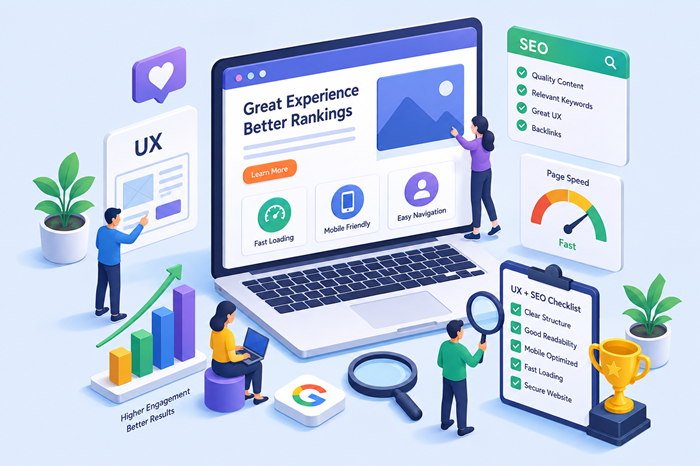
UX Is the Bridge Between Design and Search
User experience is where visual decisions and search-focused objectives often meet.
A page may contain excellent content and technically sound optimization, but visitors still need to navigate it comfortably. If buttons are difficult to find, text is hard to read, or mobile layouts are frustrating, the overall experience suffers.
Businesses that want to understand how UX and SEO connect can use this relationship to rethink how they structure important pages.
Strong seo and graphic design planning therefore starts with the visitor. What are they looking for? What information do they need first? What action should they take next?
Answering these questions can produce better pages than focusing solely on rankings or appearance.
Using Design Tools Without Losing Strategy
Modern graphic design software has made it easier for teams to produce professional-looking visual assets.
However, having access to advanced tools does not automatically produce effective communication.
A design can be technically polished and still fail if the hierarchy is unclear, the message is confusing, or the visual does not match the audience.
Useful graphic design examples often share one quality: every element has a reason for being there.
The same principle applies to seo and graphic design. Strategy should come before execution. Decide what the page needs to accomplish, then choose the visual approach that supports that objective.
Practical Ways to Combine Design and SEO
Businesses can improve the relationship between design and search by making a few practical changes.
Start With the Audience
Understand the visitor’s intent before deciding on the layout. A service page, product page, and educational article may require very different visual structures.
Design Around Content
Do not write content first and force it into a predetermined design. Let headings, sections, visuals, and supporting information work together.
Optimize Images Before Publishing
Compress images, choose appropriate formats, and use dimensions suitable for the location where each asset will appear.
Keep Mobile Users in Mind
A layout that looks excellent on a desktop screen may become difficult to use on a phone. Responsive design should be part of the initial planning process.
Measure and Improve
Review analytics, engagement patterns, conversions, and technical performance. If visitors consistently struggle with a particular section, redesigning that experience may be more valuable than simply creating more content.
Building a More Effective Digital Strategy
The relationship between seo and graphic design becomes strongest when both disciplines are included from the beginning of a project.
Instead of asking whether a page should prioritize design or search visibility, businesses should ask how the two can support the same objective.
Search optimization can help attract qualified visitors. Strong design can help those visitors understand the offer, navigate the page, trust the brand, and take the next step.
This integrated approach can also make seo services more effective because technical and content recommendations can be considered alongside the actual user experience.
An experienced seo agency can help identify search opportunities, while designers can translate those goals into a clear and useful interface. Together, these efforts can produce a more complete seo strategy.
Final Thoughts
A successful website is not built from isolated tactics. Content, technical performance, branding, usability, and visual communication all influence the overall experience.
That is why seo and graphic design deserve to be planned together rather than treated as unrelated marketing activities.
When design supports clarity, performance, accessibility, and user needs, search-focused content has a better environment in which to perform. When search strategy informs what users need from a page, design becomes more purposeful.
The result is a website that does more than attract visitors. It communicates effectively, builds confidence, and gives people a clear reason to stay and explore.
FAQs
1. Does graphic design affect SEO?
Yes, effective design can improve usability, readability, accessibility, and page experience, which can indirectly support search performance.
2. How does design improve website engagement?
Clear layouts, visual hierarchy, readable content, and intuitive navigation make pages easier and more enjoyable to use.
3. Should images be optimized for SEO?
Yes, relevant images should be appropriately sized, compressed, descriptively named when useful, and supported with suitable alternative text.
4. Can website design affect page speed?
Yes, oversized images, animations, fonts, and unnecessary visual assets can increase page weight and slow loading.
5. Why should SEO and design teams collaborate?
Collaboration helps ensure that search visibility, user experience, branding, content, and technical performance support the same business goals.