
 October 16, 2026
Graphic design plays an important role in how businesses communicate, build brand recognition, and attract customers. From a memorable logo to an engaging website, visual communication influences how people perceive a brand and decide whether to trust its products or services. Understanding the 7 types of graphic design helps business owners choose the right creative approach, while designers can identify opportunities to develop valuable skills and build stronger client relationships.
Key Takeaways
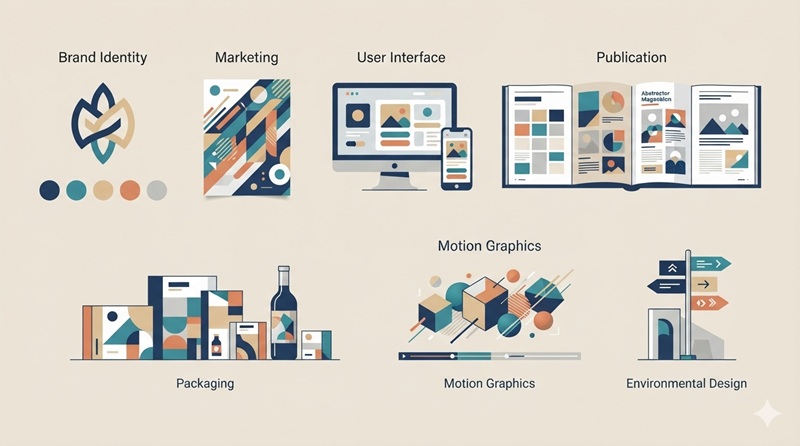
- The seven major design categories include visual identity, marketing, user interface, publication, packaging, motion, and environmental design.
- Businesses benefit from choosing designs that match their audience, goals, and customer journey.
- Designers can specialize in one category or combine several services to increase their market value.
- A strong portfolio, suitable tools, and a clear creative strategy help turn design into measurable business results.
What Are the 7 Types of Graphic Design?
The 7 types of graphic design represent distinct areas of visual communication, each serving a different purpose. Some focus on establishing brand recognition, while others support advertising, improve digital experiences, or communicate information through physical spaces.
Although these categories overlap, understanding their differences makes it easier to select the right design services for a project.
1. Visual Identity Design: Building a Recognizable Brand
Visual identity design creates the recognizable appearance of a business. It establishes a consistent visual language that communicates a company’s personality, values, and positioning.
Common elements include logos, typography, color palettes, brand guidelines, icons, and supporting graphics.
Why Businesses Need Visual Identity Design
A consistent identity helps customers recognize a company across its website, social media profiles, advertisements, packaging, and printed materials. It also helps a business communicate professionalism and establish a distinctive position in a competitive market.
For buyers, the priority should be a flexible identity that works across different platforms. Designers and agencies should deliver practical brand guidelines alongside attractive visuals.
For inspiration, explore how minimalist graphics for luxury apparel brands create a sophisticated appearance through simplicity, careful typography, and restrained visual elements.
2. Marketing and Advertising Design: Attracting Customers
Marketing design focuses on promotional materials that capture attention, communicate offers, and encourage specific actions. It connects creative presentation with business objectives such as generating leads, increasing sales, and improving brand awareness.
Typical examples include:
- Social media advertisements and promotional posts
- Website banners and landing page graphics
- Email marketing visuals
- Brochures, flyers, and posters
- Digital advertisements and campaign creatives
How Marketing Design Supports Business Growth
Effective promotional visuals make information easier to understand and help businesses communicate their value quickly. Strong layouts, readable text, and clear calls to action can encourage audiences to explore a product or service.
Buyers should evaluate whether a designer understands their audience and campaign objectives, not just whether the visuals look attractive. Sellers can demonstrate their expertise by presenting campaign concepts alongside relevant performance metrics when available.
The 7 types of graphic design include this commercially important category because businesses continually need creative materials for product launches, seasonal promotions, and customer acquisition.
3. User Interface Design: Improving Digital Experiences
User interface (UI) design focuses on the visual elements people interact with when using websites, applications, and digital products. Its purpose is to make digital experiences clear, consistent, and visually appealing.
Examples include navigation menus, buttons, forms, icons, dashboards, and page layouts.
What Makes Effective UI Design?
A successful interface balances appearance with usability. Consistent spacing, readable typography, accessible color contrast, and recognizable controls help users understand what to do next.
Businesses investing in digital platforms should also understand the ui/ux secrets that convert visitors into customers. Thoughtful interface decisions can reduce friction and make important actions easier to complete.
From the buyer’s perspective, the best design supports business goals while remaining easy to navigate. Designers should consider accessibility, responsive layouts, and real user needs throughout the process.
4. Publication Design: Organizing Information Clearly
Publication design arranges text, photographs, illustrations, and other visual elements into a readable and attractive format. It is especially important for content that communicates detailed information across multiple pages.
Examples include:
- Books and magazines
- Newspapers and editorial layouts
- Annual reports and company profiles
- Catalogs and brochures
- Digital magazines and downloadable reports
Why Layout and Typography Matter
Publication design helps readers navigate information without feeling overwhelmed. Clear headings, balanced margins, consistent typography, and logical page structures make content easier to scan and understand.
Print buyers should consider paper quality, binding, production costs, and color consistency. Digital publishers should prioritize readability across screen sizes and accessible document formats.
Designers can strengthen their work by showing how they organize complex information into clear visual hierarchies rather than relying solely on decorative elements.
5. Packaging Design: Making Products Stand Out
Packaging design combines visual presentation with practical product requirements. It determines how a product looks on a shelf, appears in online listings, and feels when a customer receives it.
Typical projects include labels, cartons, bottles, food packaging, product boxes, and shipping materials.
The Business Value of Packaging
Effective packaging communicates a product’s identity, distinguishes it from competitors, and helps customers understand important product information. Materials, colors, typography, and structural choices all contribute to the overall experience.
Buyers should consider durability, manufacturing costs, labeling requirements, sustainability, and how the packaging will be transported. Designers must balance creative concepts with production limitations and regulatory requirements relevant to the product and market.
A beautiful package is valuable, but it must also protect the product and function reliably throughout distribution.
6. Motion Graphics Design: Bringing Visuals to Life
Motion graphics design uses animation, movement, typography, and visual effects to communicate information over time. It is widely used in digital advertising, social media, presentations, product demonstrations, and video content.
Examples include animated logos, explainer videos, promotional clips, animated infographics, and title sequences.
Why Motion Graphics Are Effective
Movement can direct attention toward important information and make complex ideas easier to follow. Short animations also give brands additional ways to present products and explain services across digital channels.
Businesses should select a format that suits their intended platform, audience, and campaign budget. Designers should consider duration, file size, sound requirements, and accessibility, including captions where appropriate.
Motion work can also complement static campaign assets, helping brands maintain a consistent visual identity across video and still images.
7. Environmental Graphic Design: Connecting People With Places
Environmental graphic design combines visual communication with physical spaces. It helps people navigate locations, recognize organizations, and understand information within buildings or outdoor environments.
Common examples include:
- Wayfinding systems and directional signs
- Retail displays and branded interiors
- Exhibition graphics and trade show displays
- Office signage and environmental branding
- Public information displays
How Environmental Design Improves Physical Spaces
Clear signage helps visitors find destinations, while cohesive environmental branding creates a recognizable experience. Hospitals, shopping centers, offices, educational institutions, and event venues all benefit from well-planned visual communication.
Buyers should prioritize legibility, visibility, accessibility, material durability, installation requirements, and local signage regulations. Designers need to understand how people move through a space and how lighting, distance, and viewing angles affect visibility.
Unlike screen-based graphics, environmental projects must work within real physical conditions and remain useful over time.
How to Choose the Right Type of Graphic Design
The 7 types of graphic design serve different business needs, so selecting the right category begins with identifying the intended outcome.
| Business Goal | Recommended Design Type |
| Establish a recognizable brand | Visual identity |
| Promote products or services | Marketing and advertising |
| Improve a website or application | User interface |
| Present detailed information | Publication |
| Improve product presentation | Packaging |
| Explain ideas through movement | Motion graphics |
| Guide visitors through physical spaces | Environmental |
Many projects require more than one category. A new product launch, for example, may involve brand identity, packaging, promotional advertisements, and an updated online shopping experience.
Buyers should define their objectives, audience, budget, timeline, and deliverables before commissioning a project. Sellers can improve client satisfaction by clarifying these requirements at the beginning and establishing a realistic review process.
Essential Skills and Tools for Graphic Designers
Understanding the 7 types of graphic design is a useful starting point, but practical expertise requires a combination of creative and technical abilities.
Important skills include visual hierarchy, typography, color theory, composition, communication, problem-solving, and attention to detail. Knowledge of accessibility and production requirements is also valuable.
Popular graphic design software includes Adobe Photoshop, Adobe Illustrator, Adobe InDesign, Figma, and Canva. The right tool depends on the project, with illustration software supporting vector artwork, layout applications supporting publications, and interface tools helping teams create digital products.
A professional graphic design portfolio should demonstrate problem-solving, consistency, and the ability to adapt designs to different audiences. Buyers can use portfolios to compare relevant experience, assess creative quality, and understand how a designer approaches real-world challenges.
Designers who study 10 minimalist graphic design colors examples can explore how restrained color choices influence clarity, mood, and visual consistency.
Modern minimalism graphic design is one approach that uses simplicity, purposeful spacing, and limited visual elements to communicate ideas without unnecessary clutter. However, every project should be guided by its audience and purpose rather than a trend alone.
Designers can also explore neo-minimalism graphics designing to understand how contemporary visual styles combine simplicity with more expressive details.
What Businesses Should Look for When Hiring a Design Partner
Choosing a design partner involves more than comparing prices. Businesses should review relevant project experience, communication practices, revision policies, delivery timelines, and ownership rights for the final assets.
A reliable graphic design agency should understand the business problem before recommending a visual solution. Buyers should ask about file formats, source files, usage rights, and whether designs will be prepared for print, digital platforms, or both.
Sellers, meanwhile, can stand out by explaining their creative decisions, setting transparent expectations, and connecting design recommendations to the client’s objectives.
Strong Digital Marketing Partner
Ducky Unlimited is a suitable option for businesses seeking a digital partner that connects creative presentation with their broader online presence. Our unlimited web design offering may appeal to businesses that need ongoing website design support and a consistent visual direction.
For buyers, the key consideration is whether the service scope, turnaround expectations, revision process, and pricing model match their needs. For service providers, the opportunity lies in building long-term relationships through dependable delivery, clear communication, and consistent creative quality.
Ducky Unlimited can be considered as part of a shortlist for businesses looking to coordinate their website presentation and digital marketing efforts. Prospective clients should review its current services and terms to determine the best fit for their goals.
Conclusion
The 7 types of graphic design offer businesses and creative professionals a practical framework for understanding how visual communication supports different goals. From establishing a memorable brand to improving digital usability and making physical spaces easier to navigate, each category solves a distinct problem.
For buyers, the best choice depends on the audience, business objectives, budget, and intended application. For designers and agencies, developing strong fundamentals, building relevant portfolio projects, and communicating the value of creative decisions can lead to better client relationships.
The most effective design is not simply attractive. It communicates clearly, serves its intended audience, and supports a meaningful outcome.
Frequently Asked Questions
1. What are the 7 types of graphic design?
The seven categories are visual identity, marketing and advertising, user interface, publication, packaging, motion graphics, and environmental design.
2. Which type of graphic design is best for beginners?
Visual identity and marketing design are useful starting points because they offer opportunities to practice typography, color, composition, and layout.
3. Which graphic design category pays the most?
Earnings vary by location, experience, specialization, client industry, and project complexity. Specialized digital product, motion, and brand design work can offer strong opportunities.
4. Can one designer work across multiple design categories?
Yes. Many designers develop a primary specialization while offering complementary services that suit their skills and clients’ needs.
5. How should a business choose a graphic designer?
Review relevant portfolio examples, communication skills, pricing, project timelines, revision policies, and experience with similar business goals.