
 July 2, 2026
Creating visuals that are clean, memorable, and easy to understand has become a priority for businesses across every industry. As audiences become overwhelmed by cluttered interfaces and overly decorative visuals, designers are shifting toward a simpler yet more expressive direction. That’s exactly why neo-minimalism has become one of the biggest creative movements this year.
The rise of modern minimalist design isn’t about removing everything from a layout. Instead, it’s about making every visual element purposeful while maintaining personality and brand identity. Whether you’re designing websites, marketing materials, presentations, or social media creatives, this approach helps brands communicate faster and more effectively.
In this article, we’ll explore why neo-minimalism graphics are dominating 2026, what makes this style different from traditional minimalism, and how businesses can apply it successfully.
What Are Neo-Minimalism Graphics?
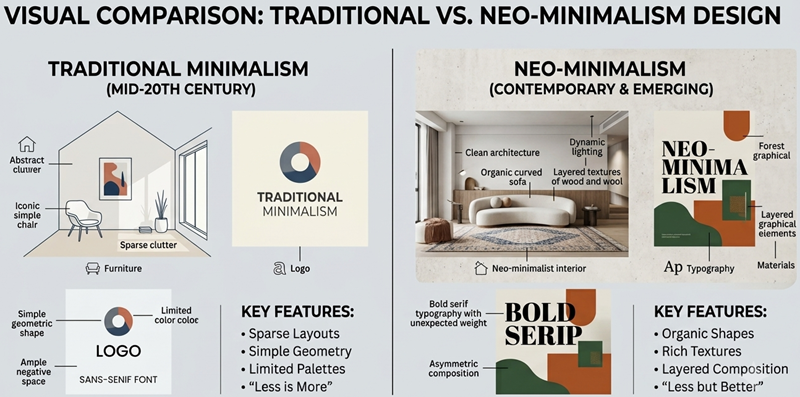
Neo-minimalism graphics combine the simplicity of classic minimalism with bold visual expression. Instead of relying on empty white space alone, designers introduce carefully selected colors, typography, gradients, textures, and geometric elements that enhance communication without creating visual clutter.
Unlike older minimalist styles that sometimes felt too plain, today’s approach balances restraint with creativity. The result is a polished visual experience that feels modern, engaging, and highly functional.
Businesses appreciate this style because it supports stronger branding while keeping interfaces easy to navigate.
Why Businesses Are Adopting Neo-Minimalism Graphics
Consumers now expect digital experiences that are fast, visually appealing, and intuitive. Overdesigned layouts often distract users instead of helping them complete tasks.
That’s why companies are embracing neo-minimalism graphics across websites, mobile apps, presentations, packaging, and advertising campaigns.
Some of the biggest advantages include:
- Cleaner user experiences
- Better readability
- Faster visual communication
- Improved mobile responsiveness
- Stronger brand consistency
- Easier content hierarchy
- More timeless visual appeal
These benefits make the design style suitable for startups, agencies, SaaS companies, ecommerce stores, and enterprise brands alike.
The Evolution from Traditional Minimalism
Earlier minimalist design focused heavily on removing decorative elements. While effective, it sometimes resulted in interfaces that lacked warmth or personality.
Today’s designers have evolved beyond that philosophy.
Rather than eliminating visual interest, they selectively introduce expressive components that reinforce the message while preserving clarity.
This shift explains why minimalism graphics trends continue evolving instead of disappearing.
Purpose Over Decoration
Every icon, image, font, and color should serve a purpose.
Instead of filling empty areas simply because space exists, designers intentionally leave breathing room that improves readability and directs user attention.
Bold Typography Takes Center Stage
Typography is no longer just for readability.
Large headlines, confident font pairings, and carefully balanced spacing become visual elements themselves, allowing brands to communicate identity without unnecessary graphics.
Key Characteristics of Neo-Minimalism Graphics
Limited Yet Powerful Color Palettes
Designers often work with only a few colors but use contrast strategically to create emphasis.
Muted backgrounds combined with vibrant accent colors help guide users naturally through content.
Functional White Space
White space isn’t empty space.
It creates balance, improves comprehension, and allows important information to stand out.
Simplified Visual Hierarchy
The strongest layouts make it obvious where users should look first.
Using scale, spacing, and typography helps establish a natural reading flow without overwhelming visitors.
Purposeful Motion
Subtle animations add life without becoming distracting.
Smooth transitions, micro-interactions, and gentle hover effects improve usability while maintaining a refined appearance.
Why Neo-Minimalism Graphics Improve User Experience
Good design isn’t only about appearance.
It’s about helping people accomplish tasks with less effort.
When users immediately understand navigation, recognize important actions, and consume information quickly, engagement naturally improves.
Many organizations investing in better digital experiences also explore UI/UX effective strategies behind high-converting websites to complement visually clean interfaces with conversion-focused design decisions.
Together, thoughtful user experience and modern visual design create stronger business results.
Industries Leading the Shift
Nearly every industry has embraced neo-minimalism graphics, but several sectors stand out.
SaaS Companies
Software platforms rely on clear interfaces that reduce friction for users.
Minimal visual noise allows customers to complete tasks faster while maintaining a professional brand image.
Ecommerce Brands
Online stores benefit from product-focused layouts where visuals highlight merchandise instead of competing with it.
Simple navigation also improves shopping experiences across mobile devices.
Marketing Agencies
Creative agencies increasingly adopt neo-minimalism graphic design because it provides flexibility across branding, advertising, websites, and digital campaigns without becoming visually outdated.
Corporate Businesses
Professional organizations appreciate timeless design systems that remain consistent across presentations, reports, websites, and internal communication materials.
The Role of Custom Graphics
Minimal doesn’t mean generic.
Custom illustrations, icons, infographics, and brand assets still play an important role.
The difference lies in intentional use rather than excessive decoration.
Many growing businesses choose professional graphics design services to maintain visual consistency across marketing materials while supporting evolving brand identities.
Professionally designed assets help companies communicate clearly while reinforcing credibility.
Common Mistakes to Avoid
Although the style appears simple, execution requires careful planning.
Avoid these common mistakes:
Removing Too Much
Minimalism shouldn’t reduce usability.
Essential navigation, labels, and context should never disappear simply to achieve a cleaner appearance.
Ignoring Brand Personality
Every brand needs distinct visual characteristics.
Even restrained layouts should reflect company values through typography, color, imagery, and tone.
Poor Contrast
Low-contrast text may look elegant but often hurts accessibility and readability.
Design should always prioritize user comfort.
How Designers Can Successfully Implement Neo-Minimalism Graphics
Successful implementation starts with understanding user goals before creating layouts.
Designers should:
- Establish clear content hierarchy
- Reduce unnecessary interface elements
- Use typography intentionally
- Create consistent spacing systems
- Maintain accessible color contrast
- Prioritize responsiveness
- Test layouts with real users
This process ensures simplicity enhances functionality rather than limiting it.
Why Subscription Design Services Continue Growing
As companies publish more content than ever, maintaining design quality becomes increasingly difficult.
Rather than hiring multiple specialists, many businesses now rely on an unlimited graphic design subscription to receive ongoing creative support while keeping branding consistent across every marketing channel.
This model offers predictable costs while allowing teams to scale creative production efficiently.
Neo-Minimalism Beyond Graphic Design
The movement now extends beyond traditional graphics into websites, product interfaces, presentations, digital advertising, packaging, and social media branding.
Organizations investing in unlimited web design often combine simplified visual systems with performance-focused development to deliver cohesive digital experiences across every customer touchpoint.
The consistency created by unified design systems helps strengthen trust and long-term brand recognition.
Looking Ahead: The Future of Neo-Minimalism Graphics
As technology continues evolving, designers will place even greater emphasis on clarity, accessibility, and usability.
Artificial intelligence, personalized interfaces, immersive experiences, and adaptive layouts will influence creative decisions, but simplicity will remain central.
Many experts also expect the latest graphics design trends 2026 to build upon this philosophy by introducing smarter personalization while preserving clean visual structures.
Businesses that embrace intentional design today will be better positioned to adapt to future digital expectations.
Designers interested in understanding how visual styles have evolved can also explore minimalism in modern web design for additional perspective on contemporary creative direction.
Conclusion
Neo-minimalism graphics represent far more than another passing design trend. They reflect a broader shift toward intentional communication, user-centered experiences, and stronger visual storytelling.
By focusing on clarity instead of excess, businesses can create designs that remain attractive, functional, and effective across every platform.
As customer expectations continue rising, organizations that prioritize thoughtful simplicity will build stronger brands, improve engagement, and deliver experiences that feel effortless from the very first interaction.
Frequently Asked Questions
1. What are Neo-Minimalism Graphics?
They combine clean layouts with expressive visuals that improve clarity without unnecessary clutter.
2. Why are Neo-Minimalism Graphics popular in 2026?
They improve usability, strengthen branding, and create more engaging digital experiences.
3. Which industries benefit most from Neo-Minimalism Graphics?
SaaS, ecommerce, agencies, healthcare, finance, education, and corporate businesses all benefit.
4. Is neo-minimalism suitable for small businesses?
Yes, it helps businesses build a professional and modern brand image with clear communication.
5. Does neo-minimalism improve website conversions?
Yes, simplified interfaces often help users navigate and complete actions more efficiently.