
 August 4, 2026
Affiliate marketing has become one of the most popular ways to earn income online by promoting products or services and receiving a commission for successful referrals. This performance-based business model allows individuals and businesses to generate revenue without creating or managing their own products, making it an accessible and scalable opportunity for long-term online growth.
Whether you’re a blogger, social media creator, website owner, or simply exploring new online opportunities, understanding how this performance-based model works can open the door to long-term growth. This guide explains everything you need to know, from the fundamentals to the key strategies that help beginners build a solid foundation.
What Is Affiliate Marketing?
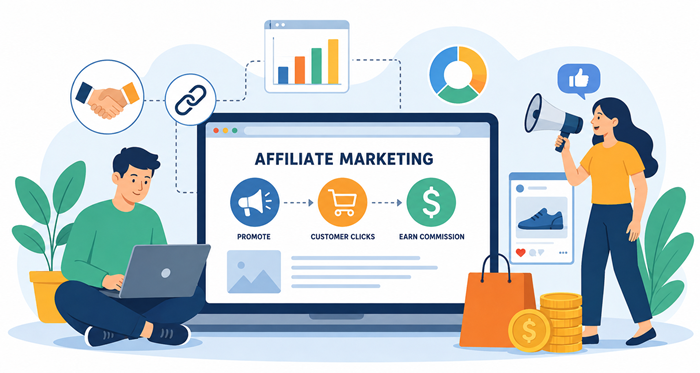
Affiliate marketing is a partnership where a business rewards an individual or publisher for driving sales, leads, or other valuable actions through a unique referral link. Instead of selling products directly, affiliates promote products or services to their audience and receive a commission whenever a qualifying action is completed.
The process benefits everyone involved. Businesses gain more exposure and customers, while affiliates earn income by recommending products they genuinely believe in. Because there is little upfront investment, many people choose this model as an entry point into earning online.
How Does Affiliate Marketing Work?
The process is straightforward, but success comes from consistency and trust.
Join an Affiliate Program
The first step is enrolling in a company’s affiliate program. After approval, you’ll receive a unique tracking link that identifies every visitor or customer you refer.
Promote Relevant Products
Next, you create valuable content that naturally introduces products or services to your audience. This could include tutorials, reviews, comparison articles, or educational resources that solve real problems.
Many successful websites combine these efforts with content marketing to educate readers before presenting product recommendations, resulting in stronger engagement and higher conversion rates.
Earn Commissions
When someone clicks your referral link and completes the required action, the affiliate platform records the transaction and credits your commission according to the program’s terms.
Why Has Affiliate Marketing Become So Popular?
The growing digital economy has made affiliate marketing appealing for both businesses and independent creators. Companies only pay for measurable results, while affiliates can build income streams without handling inventory, customer service, or shipping.
Additional benefits include:
- Low startup costs
- Flexible working schedule
- Opportunity to earn passive income
- Wide variety of industries to choose from
- Performance-based growth potential
These advantages explain why so many entrepreneurs continue investing time in affiliate marketing as part of their online business strategy.
Key Players in the Affiliate Marketing Process
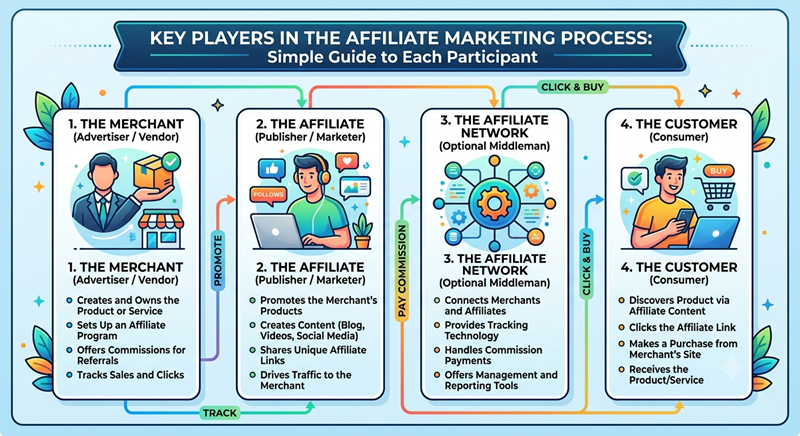
Every successful campaign relies on several participants working together.
The Merchant
The merchant creates and sells the product or service while managing the affiliate program.
The Affiliate
The affiliate publishes content, attracts an audience, and promotes relevant offers using referral links.
The Customer
Customers discover recommendations through blogs, videos, newsletters, or social media before making a purchasing decision.
The Affiliate Network
Some businesses use networks to manage tracking, reporting, and commission payments. Others operate their own affiliate marketing programs, giving affiliates direct access to promotional materials and performance reports.
Common Content That Drives Results
Successful affiliates focus on helping readers rather than pushing products. High-performing content often includes:
- Product reviews
- Buying guides
- Comparison articles
- Tutorials
- Industry news
- Resource pages
A professional website also improves credibility. Investing in unlimited web design services can help create a polished user experience that encourages visitors to stay longer and explore recommended products naturally.
Choosing the Right Niche
One of the biggest mistakes beginners make is promoting everything they find. Instead, choose a niche where you can consistently create useful, trustworthy content.
Consider factors such as:
- Personal interest and expertise
- Audience demand
- Product availability
- Long-term earning potential
- Competition level
A focused niche makes it easier to build authority, attract loyal readers, and improve your chances of succeeding with affiliate marketing.
Build Trust Before Selling
Readers are more likely to purchase through recommendations when they believe your advice is honest and well-researched. Instead of filling pages with promotional links, prioritize educational content that answers common questions and addresses genuine concerns.
Learning what is content marketing can help you create valuable articles that naturally build credibility while supporting long-term audience growth.
Common Commission Models
Not every program pays affiliates the same way. Understanding the available commission structures helps you choose opportunities that align with your goals.
Pay Per Sale (PPS)
This is the most common model. You earn a commission only when someone purchases through your referral link. Many retailers and software companies prefer this approach because payment is tied directly to revenue.
Pay Per Lead (PPL)
Some businesses reward affiliates when visitors complete a desired action, such as signing up for a newsletter, requesting a quote, or filling out a contact form.
Pay Per Click (PPC)
Although less common today, some programs compensate affiliates for generating qualified traffic rather than completed sales.
Mistakes Beginners Should Avoid
Success rarely happens overnight. Avoiding these common mistakes can save time and improve long-term results.
Promoting Too Many Products
Recommending every available product weakens your credibility. Focus on a carefully selected group of products that genuinely solve your audience’s problems.
Ignoring Audience Needs
Helpful content should always come before promotions. Readers are more likely to trust recommendations that naturally support the topic.
Expecting Instant Results
Building traffic, authority, and consistent commissions requires patience. Affiliate marketing rewards creators who continue publishing useful content over time.
Neglecting Website Quality
A slow or outdated website can discourage visitors from exploring your recommendations. Improving design, navigation, and page speed creates a better experience and encourages users to stay longer.
Tips for Long-Term Success
A sustainable strategy focuses on delivering value rather than chasing quick commissions.
- Publish informative, evergreen articles regularly.
- Update older content to keep it accurate.
- Recommend products you have researched or personally trust.
- Track performance and optimize high-performing pages.
- Build an email list to maintain long-term relationships with readers.
Many businesses also collaborate with a digital marketing agency to strengthen their online visibility, but individual affiliates can achieve impressive results by consistently creating valuable resources.
Understanding how content shapes modern web design and seo success can also help improve user engagement while supporting better search visibility.
Tracking performance is just as important as creating quality content. Understanding how to measure content marketing roi with visual metrics can help affiliates identify which pages, campaigns, and promotional strategies generate the highest returns, making it easier to refine future efforts and maximize long-term results.
Is Affiliate Marketing Suitable for Beginners?
Absolutely. Affiliate marketing for beginners offers an accessible way to learn online business without developing products or managing inventory. The biggest investment is usually time spent learning, publishing quality content, and building trust with an audience.
While early earnings may be modest, consistent effort often produces stronger results as website traffic and authority grow.
The Future of Affiliate Marketing
As online shopping continues to expand, affiliate marketing is expected to remain an important part of business growth. Consumers increasingly rely on reviews, tutorials, and comparison guides before making purchasing decisions, creating more opportunities for trusted publishers.
Artificial intelligence, personalization, and improved analytics are also helping affiliates better understand audience behavior. At the same time, businesses are placing greater emphasis on authentic recommendations rather than aggressive promotions.
Learning why flat-rate creative services are changing modern marketing can provide additional insight into how modern brands create scalable, high-quality content that supports long-term growth.
Conclusion
Whether you’re looking to create a side income or build a full-time online business, affiliate marketing offers a practical opportunity with relatively low barriers to entry. The key is choosing a niche you enjoy, creating genuinely helpful content, and recommending products that provide real value to your audience.
Success doesn’t come from publishing the most links—it comes from earning trust. By staying consistent, improving your website, and focusing on helping readers solve problems, you can build a sustainable strategy that continues to grow over time. With patience and continuous learning, affiliate marketing can become a reliable part of your long-term online success.
Frequently Asked Questions
1. What is affiliate marketing?
It is a commission-based model where you earn by referring customers to products or services.
2. Is affiliate marketing free to start?
Most affiliate programs are free to join.
3. How do affiliates get paid?
Payments are usually made through commissions on sales, leads, or qualifying actions.
4. How long does it take to earn money?
Results vary, but consistent effort typically delivers better long-term outcomes.
5. Do I need a website for affiliate marketing?
No, but a website provides greater control, credibility, and long-term growth potential.