
 August 10, 2026
Choosing the right e-commerce platform is about more than pricing, templates, or checkout features. The number and quality of apps available can determine how easily a store connects with marketing tools, payment services, analytics, shipping systems, customer support, and other business software. So, which e-commerce platform offers the most apps? In most comparisons, Shopify stands out for its large dedicated app ecosystem, while WooCommerce offers more than 1,000 extensions through its official marketplace and adds the flexibility of the broader WordPress ecosystem.
Key Takeaways
- Shopify leads with more than 8,000 apps in its official App Store.
- WooCommerce provides more than 1,000 official marketplace extensions.
- App quantity matters, but app quality, compatibility, and cost matter too.
What Is an E-Commerce Platform?
An e-commerce platform is the software businesses use to create, manage, and operate an online store. It typically handles products, inventory, shopping carts, checkout, payments, orders, and customer management.
A platform can also be extended through integrations and third-party tools. This is where apps become especially important because they allow businesses to add capabilities without developing every feature from scratch.
If you are still comparing the basics, understanding the e-commerce definition can help clarify how an online selling system differs from a standard business website.
Why Do Apps Matter for Online Stores?
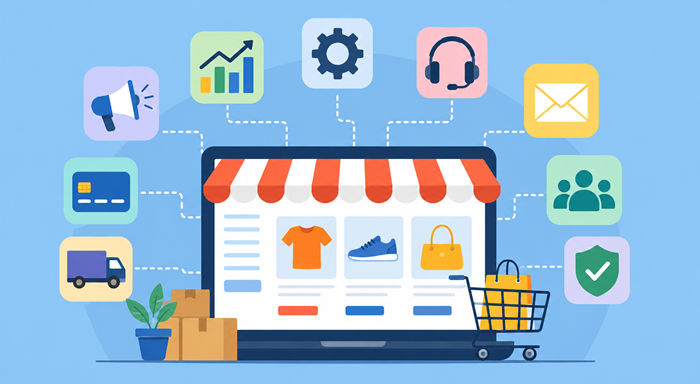
A modern store rarely operates with its core platform alone. Businesses often need additional tools for email marketing, SEO, product reviews, subscriptions, accounting, customer service, shipping, analytics, social media, and conversion optimization.
The right e-commerce platform makes these integrations easier to discover and implement.
This can save time and reduce development costs. However, installing too many apps can also create unnecessary expenses, slower performance, duplicate functionality, or compatibility problems.
That is why the size of an app marketplace should be treated as an important factor rather than the only deciding factor.
Which E-Commerce Platform Has the Most Apps?
Among major hosted commerce platforms, Shopify currently has one of the largest dedicated app ecosystems. Shopify states that its App Store has more than 8,000 apps covering different ways to customize and extend a store.
WooCommerce is another major contender. Its official marketplace currently offers more than 1,000 extensions, giving merchants a substantial collection of tools for expanding store functionality.
Based on the official marketplace figures available from these platforms, Shopify is the clear leader when comparing the size of their dedicated app and extension marketplaces.
However, the comparison needs some context. WooCommerce is built on WordPress, so its practical integration ecosystem extends beyond the official WooCommerce Marketplace. This makes raw app counts less useful when judging the total number of tools a merchant can potentially use.
Shopify: The Strongest App Ecosystem
Shopify has built its platform around a large ecosystem of merchants, developers, agencies, and technology partners. Its App Store covers categories including sales channels, product sourcing, selling tools, orders and shipping, store design, marketing, conversion, and store management.
This breadth is one of Shopify’s biggest advantages.
A growing retailer might start with basic functionality and later add advanced email automation, product reviews, subscription tools, wholesale features, SEO software, inventory management, or analytics.
Shopify also has a vetting process for apps. The company says apps go through a 100-checkpoint review before appearing in its App Store.
For merchants, this can make discovering suitable tools easier than searching randomly across the web.
Businesses that want to combine design, development, optimization, and ongoing support can also explore unlimited web design as part of a broader digital strategy.
WooCommerce: Fewer Official Extensions, Huge Flexibility
WooCommerce takes a different approach. It provides more than 1,000 extensions through its official marketplace, covering payments, shipping, subscriptions, marketing, inventory, accounting, and other business needs.
But WooCommerce’s real strength is its relationship with WordPress.
Because WooCommerce operates within the WordPress ecosystem, merchants have access to a huge range of WordPress plugins and integrations. This can give experienced businesses considerable flexibility when building a customized store.
The trade-off is that greater flexibility can also mean more technical responsibility. Hosting, security, plugin updates, compatibility, backups, and performance may require more attention than with a fully hosted platform.
For businesses that want extensive control over their technology stack, however, that flexibility can be a major advantage.
How Do Other Platforms Compare?
Shopify and WooCommerce receive most of the attention, but other platforms also provide useful app ecosystems.
Wix, for example, says its App Market contains more than 800 web apps, including third-party solutions and Wix-built tools. Its store-specific category currently lists more than 200 apps.
BigCommerce also supports an App Marketplace where merchants can discover approved applications and integrations.
These platforms may not compete with Shopify on raw marketplace size, but that does not automatically make them inferior. A smaller marketplace can still provide all the integrations a particular business needs.
The key question is not simply, “Which platform has the biggest number?” It is, “Which platform has the right apps for my business?”
App Quantity vs. App Quality
Having thousands of apps sounds impressive, but quantity alone does not guarantee a better store.
Imagine two platforms. One has thousands of apps, while the other has several hundred carefully selected tools that cover your exact requirements. The second option could be more practical.
Before installing an app, check its reviews, update history, support quality, pricing, compatibility, and impact on site performance.
You should also look for overlapping functionality. Installing three different apps that perform nearly identical tasks can make your store harder to manage.
A strong e-commerce platform should give you choices without forcing you to build an unnecessarily complicated technology stack.
What Makes a Good App Ecosystem?
A useful app ecosystem has several characteristics beyond the number of available applications.
Wide Category Coverage
The marketplace should cover the areas a growing business needs, including marketing, SEO, shipping, payments, analytics, customer support, inventory, and conversion optimization.
Shopify’s official categories reflect this broad approach, with dedicated areas for sales channels, product sourcing, selling, fulfillment, design, marketing, and store management.
Reliable Integrations
An app is only valuable when it works reliably with the rest of your store. Poor integrations can lead to duplicated data, checkout problems, tracking errors, or synchronization issues.
Strong Developer Support
A healthy ecosystem attracts developers who continue improving existing products and introducing new solutions. This keeps the platform useful as technology and customer expectations change.
Reasonable Costs
Some apps are free, while others use monthly subscriptions, usage-based pricing, or tiered plans. Businesses should calculate the total monthly technology cost before adding multiple applications.
How Apps Affect Store Growth
Apps can help businesses expand without rebuilding their websites from scratch. A small retailer might begin with basic product and checkout functionality, then add email marketing, reviews, loyalty features, advanced analytics, and automated customer support as sales increase.
This flexibility makes an e-commerce platform particularly useful for businesses at different stages of growth.
For merchants planning a new store, learning how to build an e-commerce site that actually sells can help connect platform decisions with user experience, product presentation, and conversion goals.
The best approach is to install only the tools that solve a clear business problem. More apps do not automatically mean more sales.
Do E-Commerce Apps Improve the Customer Experience?
Yes, when they are selected carefully. E-commerce apps can add features such as product recommendations, reviews, wish lists, live chat, personalized offers, faster shipping calculations, and improved search.
These features can reduce friction and help customers make purchasing decisions.
However, every additional integration should earn its place. If an app slows down pages or creates a confusing interface, its benefits may be outweighed by the negative effect on the shopping experience.
For this reason, store owners should regularly review installed applications and remove tools that are no longer necessary.
What About SEO and Website Design?
Your app ecosystem should support your broader SEO and design strategy rather than operate separately from it.
A technically strong store still needs clear navigation, fast-loading pages, optimized product content, useful internal linking, mobile responsiveness, and a straightforward checkout process.
For businesses focused on organic visibility, choosing the best ecommerce seo services that deliver results can help align technical SEO, content optimization, keyword targeting, and product-page improvements with long-term growth goals.
Website experience matters just as much. Search engines increasingly reward websites that provide useful, accessible, and satisfying experiences for visitors. A store that loads quickly and makes it easy to find products can support both usability and conversions.
When planning a new store, it is also worth considering what a web designer charge for an seo-friendly layout may add to the project because search-friendly design should be considered from the beginning rather than added later.
The same principle applies to content. Customer reviews, photos, testimonials, and other forms of social proof can strengthen product pages when they are used naturally. Exploring powering e-commerce growth with user-generated content can provide additional ideas for building trust.
Is Shopify the Best Choice for Everyone?
Not necessarily.
Shopify is a strong option for businesses that value a large app marketplace, hosted infrastructure, straightforward setup, and a broad selection of ready-made integrations.
WooCommerce may be better for businesses that want greater control, already use WordPress, or have technical resources available for customization and maintenance.
Wix can be attractive for smaller businesses that prioritize simplicity and visual website building, while BigCommerce may suit businesses looking for a commerce-focused platform with established integrations.
Ultimately, the best e-commerce platform is the one that supports your business model without adding unnecessary complexity.
Final Verdict
If the question is strictly about the number of apps available in the platform’s official marketplace, Shopify is the clear answer among the major platforms compared here.
That does not mean Shopify automatically wins every platform comparison. WooCommerce’s wider WordPress ecosystem gives it exceptional flexibility, while other platforms can provide a simpler experience for specific business needs.
The right decision should therefore balance marketplace size with app quality, pricing, performance, compatibility, technical requirements, and long-term business goals.
If you want the broadest dedicated marketplace and an easier path to adding third-party functionality, Shopify is one of the strongest choices available today.
Frequently Asked Questions
1. Which e-commerce platform has the most apps?
Shopify has more than 8,000 apps in its official App Store.
2. How many extensions does WooCommerce have?
WooCommerce currently offers more than 1,000 extensions through its official marketplace.
3. Is having more apps always better?
No, app quality, compatibility, pricing, support, and performance are equally important.
4. Is Shopify good for growing businesses?
Yes, Shopify offers a large ecosystem that lets businesses add functionality as their operational needs grow.
5. Should I install many apps on my store?
No, install only applications that provide a clear business benefit and maintain good store performance.