
 May 7, 2026
Starting a blog today is easier than ever, but choosing the right platform can still feel overwhelming. With so many options available, it’s important to find a platform that matches your goals, budget, and technical comfort level. Whether you want to create a personal website, launch a content-focused brand, or build an online business, the platform you choose will shape your long-term success.
The best platforms make content publishing simple, improve search visibility, and give you room to grow over time. They also help creators focus on quality content instead of getting stuck dealing with complicated setup issues. If you are serious about building an online presence, selecting the right foundation matters from day one.
In this guide, we’ll compare the best blogging platforms available today, explain their strengths and weaknesses, and help you decide which one fits your goals best.
Why Choosing the Right Blogging Platform Matters
Your platform affects almost everything about your website, including speed, customization, SEO performance, user experience, and monetization options. Some platforms are designed for beginners, while others are better suited for experienced creators or businesses.
A good platform should support long-term growth without forcing you to rebuild your site later. It should also make publishing and managing content easy enough that you can stay consistent.
If you’re still deciding on your website direction, understanding your ideal blog niche before selecting a platform can help narrow your options considerably.
WordPress
Best for Flexibility and Long-Term Growth
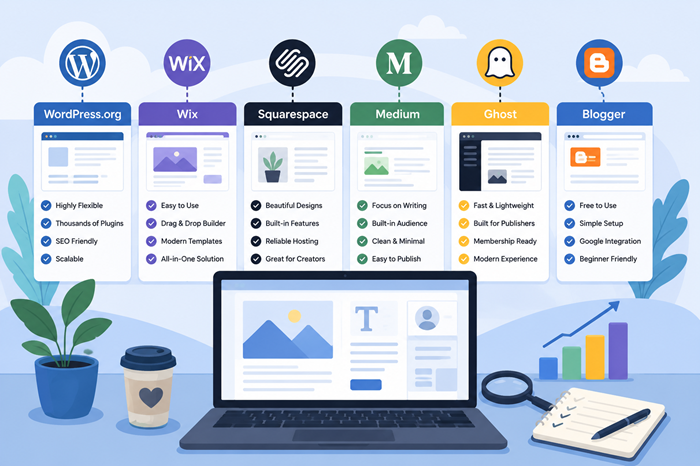
WordPress remains the most popular platform for serious website owners and content creators. It powers a large portion of the internet because it offers unmatched flexibility and customization.
With WordPress, you fully own your website. You can install themes, optimize for SEO, add advanced features, and scale your site as traffic grows.
Advantages of WordPress
- Complete control over design and functionality
- Thousands of plugins and themes
- Excellent SEO capabilities
- Easy monetization options
- Strong community support
Potential Drawbacks
- Requires separate hosting
- Slight learning curve for beginners
- Maintenance and updates are your responsibility
For creators focused on long-term growth, WordPress is often the strongest choice because it adapts as your website evolves.
Wix
Best for Beginners Who Want Simplicity
Wix is popular among beginners because of its drag-and-drop editor and beginner-friendly interface. You can build a professional-looking website without coding experience.
The platform includes hosting, templates, and built-in tools, making setup fast and straightforward.
Advantages of Wix
- Simple visual editor
- Quick setup process
- Modern design templates
- Built-in hosting and security
Potential Drawbacks
- Less flexibility compared to WordPress
- Limited scalability for larger sites
- Advanced SEO features are more restricted
Wix works well for personal blogs, small business sites, and creators who want simplicity over advanced customization.
Squarespace
Best for Design-Focused Websites
Squarespace is known for elegant templates and polished visual design. Many photographers, creatives, and portfolio-based businesses prefer it because of its professional appearance.
The platform combines design flexibility with easy management tools.
Advantages of Squarespace
- Beautiful templates
- Strong visual presentation
- Reliable hosting included
- Easy-to-manage interface
Potential Drawbacks
- Fewer third-party integrations
- Limited customization compared to open-source platforms
- Monthly pricing can be higher
If visual branding is a priority, Squarespace offers a refined experience with minimal technical work.
Medium
Best for Writers Focused Purely on Content
Medium removes most technical responsibilities and focuses entirely on publishing. Writers can create articles quickly without worrying about design, hosting, or maintenance.
The platform also has a built-in audience, which helps new writers gain visibility.
Advantages of Medium
- Extremely easy to use
- No setup required
- Built-in reader community
- Clean reading experience
Potential Drawbacks
- Limited control over branding
- You do not fully own your audience
- Monetization options are restricted
Medium is ideal for writers who care more about publishing content than building a fully customized website.
Ghost
Best for Independent Publishers
Ghost is a modern publishing platform built specifically for content creators and subscription-based businesses. It offers strong performance, clean design, and built-in membership features.
Advantages of Ghost
- Fast website performance
- Clean user interface
- Membership and newsletter tools included
- Strong writing experience
Potential Drawbacks
- Smaller ecosystem than WordPress
- Fewer plugins and integrations
- More technical setup for self-hosted versions
Ghost works especially well for independent publishers focused on newsletters, memberships, and premium content.
Blogger
Best Free Option for Beginners
Blogger is one of the oldest blogging platforms still available. Owned by Google, it provides a free and simple way to start publishing online.
Advantages of Blogger
- Completely free
- Easy Google integration
- Simple setup process
- Minimal maintenance
Potential Drawbacks
- Outdated customization options
- Limited scalability
- Less professional appearance
Blogger can work for hobby websites or beginners testing content creation before investing in a larger platform.
Shopify
Best for Content and Ecommerce Together
Shopify is primarily an ecommerce platform, but it also includes strong content publishing tools. Businesses that combine products with educational content often benefit from Shopify’s integrated structure.
Advantages of Shopify
- Excellent ecommerce tools
- Secure hosting included
- Strong product management
- Good website performance
Potential Drawbacks
- Blogging features are secondary
- Higher monthly costs
- Less content flexibility than WordPress
Shopify is a smart option for brands that want content marketing tied directly to product sales.
Key Features to Look for in a Blogging Platform
Not every platform is built the same. Before making a decision, compare the features that matter most for your goals.
Ease of Use
A platform should make publishing simple. If the dashboard feels confusing, maintaining consistency becomes harder over time.
SEO Capabilities
Search visibility matters for long-term traffic growth. Look for platforms that allow customizable URLs, metadata, image optimization, and fast loading speeds.
Customization Options
Some creators want complete design control, while others prefer simplicity. Choose a platform that matches your technical comfort level.
Scalability
A small blog today may become a large content website later. Your platform should support future growth without major limitations.
Monetization Tools
If you plan to generate revenue through ads, products, memberships, or services, make sure your platform supports those options.
Which Blogging Platform Is Best for SEO?
For most users, WordPress remains the strongest SEO choice because of its flexibility, plugins, and customization options. It allows creators to fully optimize technical SEO settings and site performance.
However, platforms like Ghost and Squarespace have improved significantly in recent years and now offer solid SEO foundations for most users.
No platform alone guarantees rankings. High-quality content, consistency, user experience, and strong optimization practices remain the biggest factors.
Creating engaging titles also plays a major role in attracting readers. Learning how to write headlines that drive clicks can improve visibility and increase traffic over time.
How to Choose the Right Platform for Your Goals
The best choice depends entirely on your priorities.
- Choose WordPress if you want maximum flexibility.
- Choose Wix if you value simplicity.
- Choose Squarespace for premium design.
- Choose Medium for pure writing.
- Choose Ghost for memberships and newsletters.
- Choose Shopify for ecommerce-focused content.
Before committing, think carefully about your long-term plans. Switching platforms later can become complicated and time-consuming.
Your website identity also matters. Picking the right blog name early can help strengthen your branding and make your content more memorable.
Building a Professional Blog That Grows
A successful website requires more than just good content. Design quality, speed, usability, and branding all contribute to long-term growth.
Many businesses and creators eventually move toward professional website services because custom development gives them greater flexibility and stronger branding opportunities. Investing in unlimited web design can simplify ongoing improvements and help maintain a polished online presence as your content grows.
Consistency also matters more than perfection. Publishing helpful, well-structured content regularly will usually outperform complicated strategies focused only on trends.
Common Mistakes to Avoid When Choosing a Platform
Choosing Based Only on Price
Free platforms can work initially, but long-term limitations often become frustrating as your site grows.
Ignoring SEO Features
Some platforms make optimization difficult, which can limit your traffic potential later.
Overcomplicating the Setup
Many beginners choose advanced tools they never fully use. Start with a platform that feels manageable.
Not Planning for Growth
Think beyond your first few months. Your future needs may include memberships, ecommerce, courses, or advanced customization.
Final Thoughts
Choosing the right platform is one of the most important decisions for anyone entering the world of blogging. The ideal choice depends on your experience level, goals, and how much control you want over your website.
For long-term flexibility and scalability, WordPress remains a leading option. For simplicity and fast setup, platforms like Wix and Squarespace work extremely well. Writers focused mainly on publishing may prefer Medium or Ghost.
The key is selecting a platform that supports your growth instead of limiting it later. A well-built website combined with valuable content creates the foundation for sustainable success online.
FAQs
What is the best platform for beginners?
Wix is often the easiest platform for beginners because of its drag-and-drop editor.
Which blogging platform is best for SEO?
WordPress offers the strongest SEO flexibility and customization options.
Can I make money from a blog?
Yes, blogs can generate income through ads, affiliate marketing, products, and memberships.
Is WordPress better than Wix?
WordPress offers more flexibility, while Wix is simpler for beginners.
Do I need coding skills to start a blog?
No, most modern platforms allow you to create and manage a site without coding knowledge.