
 July 15, 2026
Launching a new product takes more than a great idea. It requires careful planning, clear communication, and a website that guides visitors toward taking action. One of the smartest ways to achieve that is by creating a website wireframe before moving into design and development.
A well-planned website wireframe acts as the blueprint for your website. It helps teams organize content, define user journeys, and identify potential usability issues before investing time and money into visual design. Whether you’re introducing a startup, launching a SaaS platform, or releasing a new online store, starting with a structured plan significantly improves your chances of success.
In this guide, you’ll learn why wireframing plays such a critical role in product launches, how it saves resources, and the best practices for creating a website that delivers a seamless user experience.
What Is a Website Wireframe?
A website wireframe is a simplified visual layout that outlines the structure of a webpage before colors, images, branding, and animations are added. Think of it as the architectural blueprint for your website.
Rather than focusing on aesthetics, a wireframe prioritizes:
- Page hierarchy
- Navigation structure
- Content placement
- Call-to-action positioning
- User flow
- Functional elements
This early planning stage helps designers, developers, marketers, and stakeholders align before the project moves into production.
Why Product Launches Need a Website Wireframe First
Launching without a clear plan often leads to confusion, revisions, and missed opportunities.
A website wireframe provides clarity from day one by helping everyone understand how the website will function before any design work begins.
Some of the biggest advantages include:
- Eliminates guesswork
- Improves communication between teams
- Keeps the project aligned with business goals
- Makes user experience the priority
- Reduces unnecessary redesigns
Instead of fixing problems after development, you’re solving them before they become expensive.
A Website Wireframe Helps You Build Around User Experience
Your visitors don’t see your planning process—but they experience its results.
Every successful website is designed around user behavior. Wireframing allows you to map the exact path visitors will take from landing on the homepage to completing a purchase, submitting a form, or signing up for a service.
Questions answered during this stage include:
- What should visitors see first?
- Which information deserves the most attention?
- Where should primary CTAs appear?
- How many steps should the conversion process take?
Answering these questions early creates a smoother experience for potential customers.
Faster Collaboration Across Teams
Launching a product usually involves multiple departments.
Marketing wants strong messaging.
Designers focus on visuals.
Developers need functionality.
Business owners care about conversions.
A website wireframe becomes the common language that connects everyone. Instead of debating colors or fonts, discussions stay focused on layout, content, and functionality.
This dramatically reduces misunderstandings throughout the project.
If you’re working with an experienced unlimited web design service, wireframing often becomes the foundation that keeps projects moving efficiently from concept to launch.
Prevents Costly Changes Later
Website redesigns become expensive when structural problems are discovered after development.
For example:
- Navigation doesn’t make sense.
- Product pages lack important information.
- Checkout flow feels confusing.
- Contact forms are difficult to find.
Making these adjustments after coding has started requires additional development time.
Creating a website wireframe first allows these issues to be identified early, making revisions faster and significantly less expensive.
Clarifies Your Product Messaging
Many launches fail because visitors don’t immediately understand the product.
Wireframing forces teams to prioritize information.
Instead of overwhelming users with every feature, you determine:
- Main value proposition
- Supporting benefits
- Trust signals
- Testimonials
- Product features
- Pricing information
- Calls to action
This creates a cleaner, more persuasive website that communicates value quickly.
Makes Conversion Optimization Easier
Every landing page should have one clear objective.
Whether it’s:
- Buying a product
- Scheduling a demo
- Starting a free trial
- Requesting a quote
A website wireframe helps place buttons, forms, testimonials, FAQs, and trust elements where they’ll have the greatest impact.
Rather than relying on assumptions, the page is intentionally structured around user behavior.
Wireframes Improve SEO Planning From the Beginning
SEO isn’t just about keywords.
Website structure also matters.
Planning navigation, internal linking, page hierarchy, and content organization during the wireframing stage creates a stronger foundation for search visibility.
This is why many businesses combine planning with web design packages with technical seo to ensure their websites are optimized before launch rather than after.
Easier Content Planning
Writing website copy becomes much easier when every section already has a defined purpose.
A wireframe tells copywriters exactly where content belongs.
Instead of writing randomly, content can be tailored for:
- Headlines
- Feature sections
- FAQs
- Testimonials
- Product descriptions
- Calls to action
The result is cleaner messaging and a more organized website.
Supports Better Mobile Experiences
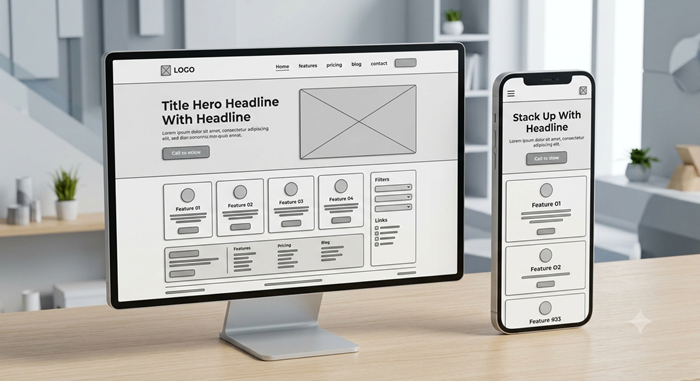
Most users now browse websites on mobile devices.
Wireframing encourages responsive thinking from the start.
Designers can prioritize:
- Mobile navigation
- Button placement
- Readable typography
- Simplified layouts
- Faster user interactions
Planning these elements before design helps create a consistent experience across every device.
Keeps Stakeholders Aligned
One of the biggest challenges during a product launch is managing feedback.
Without a visual plan, everyone imagines something different.
A website wireframe provides a shared reference point.
Stakeholders can approve:
- Layout
- User flow
- Content hierarchy
- Navigation
before visual design begins.
This reduces approval delays and endless revision cycles.
Choosing the Right Tools for Wireframing
There are many platforms available for planning layouts.
Selecting the right website wireframe tool depends on your workflow, collaboration needs, and project complexity.
Some teams prefer low-fidelity sketches, while others build interactive prototypes that simulate user journeys before development begins.
The important part isn’t the software—it’s the planning process.
Templates Can Speed Up the Process
Starting from scratch isn’t always necessary.
A website wireframe template provides a solid framework for common pages such as:
- Homepages
- Product pages
- Contact pages
- Pricing pages
- Landing pages
Templates save time while still allowing customization for your brand and business goals.
When a Wireframe Builder Makes Sense
Businesses without in-house designers often use a website wireframe builder to quickly visualize layouts before hiring developers.
These platforms help communicate ideas more effectively and reduce misunderstandings during project handoffs.
Working With the Right Design Partner
Even the best ideas need experienced execution.
Choosing a reliable website and graphic design company ensures your wireframe evolves into a polished, conversion-focused website rather than simply becoming another design document.
An experienced team understands how layout, branding, user experience, and technical performance work together to support a successful launch.
Book Your Appointment:

Why Agencies Begin With Wireframes
Professional teams rarely jump straight into visual design.
A trusted website making agency typically begins every major project with planning and wireframing because it creates fewer revisions, faster production timelines, and stronger business outcomes.
This structured process keeps every stakeholder aligned from concept to completion.
Avoid Unexpected Budget Surprises
Many businesses underestimate the true cost of website development because they overlook planning.
Understanding the hidden website design pricing factors can help you allocate your budget more effectively and avoid expensive revisions that often result from skipping the wireframing stage.
Wireframes Benefit More Than Product Pages
Wireframing isn’t limited to launch pages.
It also improves:
- Service websites
- Membership platforms
- SaaS products
- Online stores
- Corporate websites
- Portfolio websites
Every page benefits from thoughtful structure before visual design begins.
Businesses that invest in planning typically produce websites that are easier to navigate, easier to manage, and more effective at converting visitors.
Plan for Long-Term Growth
A successful launch is only the beginning.
As your business grows, your website will likely expand with new products, landing pages, blog posts, and marketing campaigns.
Starting with a website wireframe creates a scalable structure that makes future updates much easier without disrupting the overall user experience.
If your launch includes an online store, thoughtful planning also supports e-commerce growth with user-generated content by creating dedicated areas for reviews, customer photos, and social proof that strengthen buyer confidence over time.
Professional Planning Saves Time and Money
Many businesses focus on design costs while overlooking the value of proper planning.
Before committing to a project, it’s worth understanding how much do web designers charge and comparing that investment with the savings that come from reducing revisions through a well-planned wireframing process.
For companies seeking predictable pricing, choosing a one price unlimited website and graphic design service can simplify budgeting while ensuring continuous design support throughout product development.
Conclusion
Every successful product launch begins with a solid plan, and that plan starts with a website wireframe. It provides clarity before design, reduces costly revisions, improves collaboration, strengthens user experience, and lays the groundwork for better conversions.
Rather than treating wireframing as an optional step, think of it as an investment in your launch’s success. A carefully planned structure gives designers, developers, marketers, and business owners a shared roadmap that keeps the project focused from start to finish.
When your website is built on a strong foundation, every stage that follows becomes more efficient, helping you launch with greater confidence and achieve stronger long-term results.
Frequently Asked Questions
1. Why is a website wireframe important before launching a product?
It helps organize content, improve user experience, and reduce costly revisions.
2. How detailed should a website wireframe be?
It should clearly define layout, navigation, content hierarchy, and key user interactions.
3. Can small businesses benefit from wireframing?
Yes, it saves time, controls costs, and creates a more effective website regardless of business size.
4. Is a wireframe different from a website design?
Yes, a wireframe focuses on structure, while design adds branding, visuals, and styling.
5. Who should approve a website wireframe?
All key stakeholders should review and approve it before design and development begin.