
 May 13, 2026
Images are often the biggest reason a website feels slow. Even with modern hosting and optimized code, oversized graphics can quietly hurt performance, user experience, and search visibility. That’s why developers and marketers are now moving beyond basic image compression and focusing on next-generation formats like AVIF and WebP.
If you want better page performance, lower bounce rates, and stronger rankings, understanding how these formats work is no longer optional. Modern image optimization directly impacts user engagement, Core Web Vitals, and overall website load speed.
In this guide, we’ll break down the differences between AVIF and WebP, explain when to use each format, and show how smarter image delivery can improve both SEO and conversions.
Why Image Optimization Matters More Than Ever
Website visitors expect pages to load almost instantly. A delay of even a few seconds can increase abandonment rates and reduce conversions.
Search engines also pay close attention to performance signals. Google’s Core Web Vitals measure how quickly content appears and how stable pages feel during loading. Heavy images negatively affect these metrics, especially on mobile devices.
Traditional formats like JPEG and PNG still work, but they’re no longer the most efficient option for modern websites. New formats offer smaller file sizes without sacrificing visual quality.
That’s where AVIF and WebP come in.
What Are Next-Gen Image Formats?
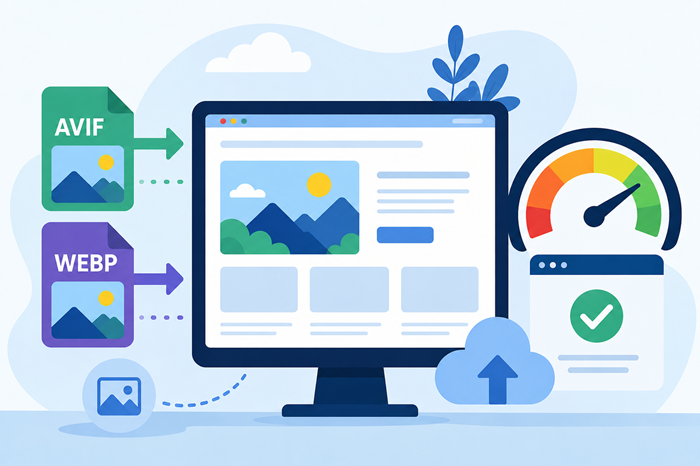
Next-gen image formats are advanced file types designed to deliver better compression and higher image quality than older formats.
The two most widely used options today are:
- AVIF
- WebP
Both reduce file sizes dramatically compared to JPEG and PNG, helping pages load faster while maintaining strong visual clarity.
For businesses investing in performance-focused design, choosing the right format can influence SEO rankings, user experience, and even conversion rates.
Understanding WebP
WebP was developed by Google to create smaller image files while preserving image quality.
It supports:
- Lossy compression
- Lossless compression
- Transparency
- Animation
Because WebP has been around longer, it enjoys excellent browser compatibility and broad CMS support.
Benefits of WebP
Faster Load Times
WebP images are significantly smaller than PNG and JPEG files. This reduction helps websites render quicker across desktop and mobile devices.
Strong Browser Support
Most modern browsers fully support WebP, making implementation relatively simple for developers.
Flexible Use Cases
WebP works well for:
- Blog images
- Product photos
- Background graphics
- Transparent assets
Its versatility makes it a safe and reliable option for many websites.
Understanding AVIF
AVIF is a newer image format based on the AV1 video codec. It was designed to push compression efficiency even further than WebP.
In many cases, AVIF files are noticeably smaller while maintaining superior visual quality.
Benefits of AVIF
Better Compression Rates
AVIF can reduce image sizes more aggressively than WebP without creating obvious visual artifacts.
That means faster loading pages with less bandwidth usage.
Higher Visual Quality
AVIF handles gradients, shadows, and detailed textures exceptionally well. This makes it useful for modern web design where visual polish matters.
Improved Performance on Large Sites
Websites with image-heavy layouts often see meaningful speed gains after switching to AVIF.
This is especially important for businesses running media-rich pages or ecommerce stores.
AVIF vs WebP: Key Differences
Compression Efficiency
AVIF usually delivers smaller file sizes than WebP at similar quality levels.
If maximum compression is your priority, AVIF often wins.
Browser Compatibility
WebP currently has broader browser compatibility overall.
AVIF support continues to grow rapidly, but some older browsers may still require fallback formats.
Encoding Speed
WebP is generally faster to encode and process.
AVIF can take longer during image generation because of its advanced compression techniques.
Visual Quality
AVIF tends to preserve fine detail more effectively, especially at lower bitrates.
For visually rich websites, this can make a noticeable difference.
Which Format Should You Use?
The best solution often depends on your website goals.
Use WebP If:
- You want broad compatibility
- You need easy CMS integration
- You prioritize implementation simplicity
- Your workflow already supports WebP
Use AVIF If:
- You want maximum compression
- Your site relies heavily on imagery
- Performance optimization is a major priority
- You want the newest generation of image efficiency
Many websites now use both formats together with browser-based fallbacks.
How Image Formats Affect SEO
Image optimization plays a direct role in search performance.
Faster pages improve user experience, reduce bounce rates, and support stronger Core Web Vitals scores.
That’s why many brands working with professional technical seo services now prioritize image delivery alongside code optimization and caching strategies.
Search engines increasingly reward websites that provide smoother, faster experiences across all devices.
The Connection Between Images and User Experience
People judge websites quickly.
If pages load slowly or feel laggy, visitors often leave before engaging with the content.
Images contribute heavily to that perception.
Large files delay rendering, interrupt scrolling, and hurt mobile usability. By reducing image sizes with AVIF or WebP, websites feel noticeably more responsive.
This performance improvement also supports conversion-focused strategies rooted in the psychology behind clicks .
When pages feel faster and cleaner, users are more likely to trust the experience.
Why Designers Should Care About Image Formats
Image optimization is no longer just a developer concern.
Designers now play a major role in balancing quality and performance.
Modern visual systems must look polished while remaining lightweight enough for fast delivery.
That balance becomes even more important when comparing concepts like AI design vs vector illustration, where file complexity can dramatically affect rendering performance.
A visually impressive website means very little if users abandon the page before assets fully load.
Common Mistakes When Using AVIF and WebP
Uploading Oversized Images
Even next-gen formats cannot fully compensate for unnecessarily large dimensions.
Always resize images before uploading them.
Ignoring Fallback Support
Some browsers still require backup formats.
Using proper fallback handling ensures all visitors receive compatible images.
Over-Compressing Files
Excessive compression can create noticeable quality loss.
Balance file size reductions with acceptable visual clarity.
Forgetting Lazy Loading
Lazy loading prevents off-screen images from loading immediately, reducing initial page weight.
Combined with AVIF or WebP, it creates even better performance gains.
How Developers Implement Next-Gen Formats
Modern websites typically use the HTML <picture> element to serve different image formats based on browser compatibility.
This approach allows browsers to choose the most efficient supported format automatically.
Content delivery networks and optimization plugins also simplify implementation for non-technical teams.
Many businesses working with a technical seo agency integrate automated image optimization directly into their deployment workflows.
The Role of Performance Testing
Image optimization should always be measured, not guessed.
Developers use tools like:
- Lighthouse
- GTmetrix
- PageSpeed Insights
These platforms help identify oversized assets and measure loading improvements after optimization.
Running a regular website test speed analysis helps uncover bottlenecks before they affect rankings or conversions.
Why Core Web Vitals Continue to Matter
Google increasingly emphasizes real-world performance metrics.
Image-heavy websites often struggle with:
- Largest Contentful Paint (LCP)
- Cumulative Layout Shift (CLS)
- Interaction responsiveness
Switching to efficient image formats can significantly improve these metrics.
This is especially valuable for landing pages designed around the best landing page layouts, where speed directly impacts lead generation performance.
Beyond Compression: Smarter Visual Optimization
Reducing file size is only part of the equation.
High-performing websites also focus on:
- Responsive image sizing
- Proper caching
- CDN delivery
- Adaptive loading
- Efficient rendering strategies
Some businesses discover that oversized visuals create hidden SEO problems commonly referred to as the speed trap.
Beautiful graphics should enhance performance — not slow it down.
Should Small Businesses Switch to AVIF?
For many smaller websites, WebP may already provide major improvements over JPEG and PNG.
However, AVIF becomes increasingly valuable as websites grow more visually complex.
If your site depends heavily on imagery, galleries, or modern branding visuals, the additional compression benefits can be substantial.
Businesses investing in scalable growth often pair optimized media with flexible solutions like unlimited web design to maintain both performance and visual consistency over time.
The Future of Image Optimization
AVIF adoption continues to grow rapidly, and future browser support will likely make it even more dominant.
At the same time, WebP remains a highly practical and reliable solution for most websites today.
The smartest approach is often a hybrid strategy:
- Use AVIF where supported
- Provide WebP fallbacks
- Maintain responsive image delivery
- Continuously monitor performance
This creates the best possible balance between speed, compatibility, and user experience.
Final Thoughts
Modern image optimization goes far beyond adding alt text or compressing JPEGs.
Choosing efficient formats like AVIF and WebP can dramatically improve loading times, enhance user experience, and strengthen SEO performance.
WebP offers strong compatibility and easy adoption, while AVIF pushes compression efficiency even further for performance-focused websites.
The best choice depends on your goals, audience, and technical setup. But one thing is clear: faster images lead to faster websites — and faster websites consistently perform better in search and conversions.
FAQs
Is AVIF better than WebP?
AVIF usually provides smaller file sizes and better compression quality than WebP.
Does WebP still matter in 2026?
Yes, WebP remains widely supported and highly effective for most websites.
Can AVIF improve SEO?
Yes, smaller image files can improve loading performance and Core Web Vitals.
Should every website use next-gen image formats?
Most modern websites benefit from using AVIF, WebP, or both.
Are JPEG and PNG outdated?
They still work, but newer formats are generally more efficient for web performance.