
 August 18, 2026
A successful business website needs more than an attractive homepage. It should help visitors understand your offer, find information quickly, trust your brand, and take the next step with confidence. The right website elements create a better user experience while supporting search visibility, lead generation, and long-term business growth.
This updated guide builds on the original article and expands the practical advice around the 10 essential website elements modern businesses should prioritize.
Key Takeaways
- A clear message, simple navigation, and strong calls to action help visitors move through your site.
- Mobile performance, speed, security, and accessibility directly affect user experience.
- Trust signals, useful content, and FAQs can turn uncertain visitors into potential customers.
- SEO-friendly structure helps your business website attract relevant organic traffic.
1. Clear Business Information and Value Proposition
The first of the essential website elements is a clear explanation of what your business does and why customers should choose you.
Visitors should understand your service, product, target audience, and primary benefit within seconds of landing on your homepage. Avoid vague statements that sound impressive but do not explain anything.
A strong headline can answer three basic questions:
- What do you offer?
- Who do you serve?
- What makes your solution useful?
For example, instead of saying “We create digital solutions,” a web design company could say, “We build conversion-focused websites for growing small businesses.”
Your homepage should also provide enough supporting information to encourage visitors to explore further. Clear messaging reduces confusion and gives every other part of your website a stronger purpose.
2. Simple and Intuitive Navigation
Good website elements should make browsing easier rather than forcing visitors to figure out how your site works.
Your main navigation should include the pages people are most likely to need, such as Services, About, Portfolio, Blog, FAQs, and Contact. Keep labels familiar and avoid complicated menu structures.
For larger websites, dropdown menus can help organize related services, but they should not become overwhelming.
A visitor should be able to reach an important page within a few clicks. Consistent navigation also helps search engines understand the relationship between pages and discover important content more efficiently.
3. Prominent Contact Information
Making contact information easy to find is one of the simplest but most important website elements for a service-based business.
Include your phone number, email address, contact form, or other relevant communication options in logical locations. A phone number in the header can be particularly useful for businesses that depend on direct inquiries.
Your Contact page should provide more than a form. Consider adding business hours, service areas, social profiles, and other information that answers practical questions before someone reaches out.
For local businesses, consistent business information across the website can also support local search visibility.
4. Strong Calls to Action
A visitor may like your website but still leave if they do not know what to do next.
That is why calls to action are among the most valuable website elements for converting traffic into leads or customers. Every important page should have a logical next step.
Examples include:
- Request a Quote
- Schedule a Consultation
- Get Started
- Call Today
- View Our Services
- Download the Guide
The CTA should match the visitor’s intent. Someone reading an educational article may not be ready to buy, while someone viewing a pricing or service page may be much closer to making a decision.
If you are evaluating unlimited web design, consider how the design, messaging, and conversion paths work together rather than looking at visual appearance alone.
5. Responsive, Mobile-Friendly Design
A modern business website must work properly across smartphones, tablets, laptops, and desktop screens.
Responsive design allows layouts, images, buttons, forms, and navigation to adapt to different screen sizes. This is especially important because mobile visitors may form their first impression of your company from a relatively small screen.
Test important pages on multiple devices. Make sure text is readable, buttons are easy to tap, menus are functional, and forms do not require unnecessary scrolling or zooming.
Mobile usability is not simply a design preference. It is part of providing a professional experience to every potential customer.
6. Fast Loading and Reliable Performance
Speed is another critical group of website elements because users rarely have patience for slow pages.
Large images, excessive scripts, poorly configured plugins, and unnecessary third-party tools can all affect loading performance. A website may look impressive but still lose visitors if its pages take too long to become usable.
Start by compressing images, reducing unnecessary code, using efficient hosting, and reviewing third-party scripts. Performance should also be monitored after major design or content changes.
For businesses comparing freelancer vs agency: web design hourly rate, performance optimization is one of the areas worth discussing before selecting a provider.
7. Trust Signals and Social Proof
People want evidence before they spend money with a business they do not know.
Testimonials, reviews, case studies, client logos, awards, certifications, guarantees, and recognizable credentials can strengthen credibility. These website elements work particularly well when they are specific and authentic.
Instead of displaying a generic statement such as “Our customers love us,” use a real testimonial that explains the customer’s problem and outcome.
Case studies can be even more effective because they show your process, solution, and results. When possible, include relevant details rather than making broad claims.
Trust signals should support the page naturally instead of making it feel like a collection of advertisements.
8. Helpful Content and Frequently Asked Questions
Useful content gives visitors a reason to stay on your site and helps answer questions that may prevent them from contacting you.
A business website can use service pages, blog articles, guides, comparison content, tutorials, and FAQs to address customer concerns throughout the buying journey.
A well-planned content strategy also creates opportunities to target relevant search queries without forcing keywords into every paragraph.
If your company serves smaller organizations, even a small business website can benefit from clear educational content. You can also explore small business website design with a money-back guarantee when considering different approaches to website development.
FAQs deserve special attention because they can address pricing, timelines, services, policies, compatibility, availability, and other common concerns. Keep answers concise and make sure they genuinely help the reader.
9. Search-Friendly Structure and SEO Foundations
SEO should be considered during website planning rather than added after everything has been designed.
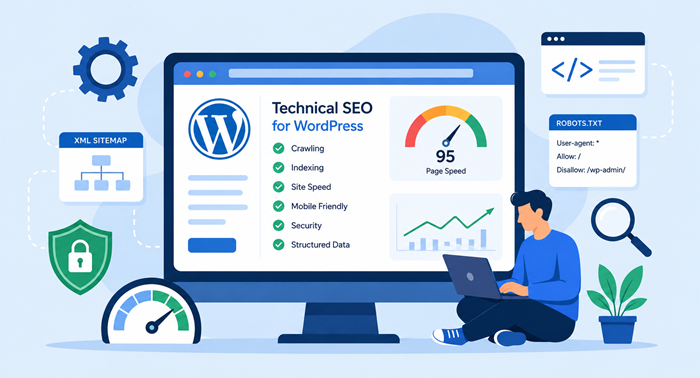
Important website elements for SEO include descriptive page titles, logical headings, useful content, clean URLs, internal links, image alt text, appropriate metadata, and a crawlable site structure.
Each important page should have a clear purpose and target a relevant search intent. Avoid creating multiple pages that compete for exactly the same query without a strategic reason.
Internal linking is also valuable because it helps users discover related information while giving search engines additional context about your site’s content.
You can also learn more about ways to design websites that set you apart while maintaining usability and search-friendly structure.
10. Interactive and Accessible User Experience
Modern sites should do more than display static information. Forms, calculators, filters, menus, booking tools, search features, videos, and other functions can make a site easier and more useful when implemented thoughtfully.
The technology behind these features makes website elements interactive, but functionality should always serve a clear user need.
Accessibility should be part of the same conversation. Use readable typography, sufficient contrast, descriptive links, keyboard-friendly controls, meaningful image alternatives, and clear form labels.
A polished user experience should work for as many visitors as possible, including people using assistive technologies.
How Much Should You Invest in a Business Website?
The right budget depends on your business goals, number of pages, functionality, content requirements, design complexity, and development approach.
There is no universal price because a five-page brochure site and a large website with custom integrations have very different requirements.
Before comparing quotes, define what you actually need. Consider the number of pages, features, content creation, SEO requirements, maintenance, hosting, and future updates.
If you are researching how much do web designers charge, use pricing information as a starting point rather than the only factor in your decision.
A lower initial quote may not represent better value if important functionality, optimization, or ongoing support is missing.
Common Mistakes to Avoid
Even when the right website elements are present, poor execution can reduce their effectiveness.
Avoid cluttered navigation, oversized pop-ups, vague headlines, weak CTAs, slow pages, difficult forms, stock-heavy content, outdated information, and pages that are not optimized for mobile devices.
It is also a mistake to design a website only around what the business wants to say. Your site should reflect what customers need to know at each stage of their decision-making process.
Review analytics, user behavior, search performance, and conversion data regularly. A website should evolve as your customers and business change.
Final Thoughts
The best business websites are not necessarily the ones with the most features. They are the ones that make it easy for the right visitors to understand the business, find useful information, build trust, and take action.
From clear messaging and navigation to speed, SEO, accessibility, and conversion-focused content, these website elements work together to create a stronger digital presence.
Think of your website as an ongoing business asset rather than a one-time design project. Review its performance, listen to customer feedback, update outdated content, and improve areas that create friction.
When each component has a clear purpose, your site can become more than an online brochure. It can support visibility, credibility, lead generation, and business growth.
FAQs About Business Website Essentials
What are the most important website elements for a business?
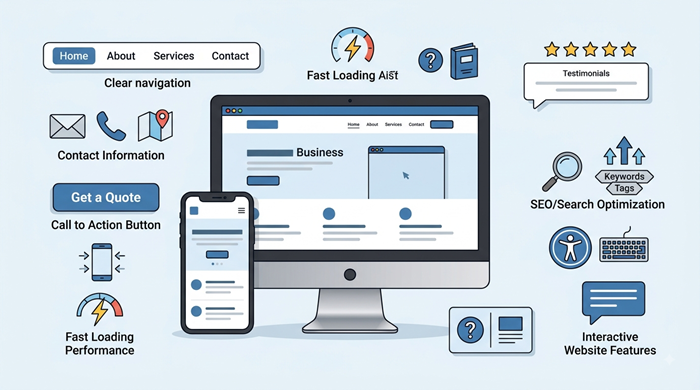
Clear messaging, navigation, contact information, CTAs, mobile design, speed, trust signals, content, SEO, and accessibility are key.
Why are website elements important for SEO?
They help search engines understand your content while making pages easier for visitors to navigate and use.
How many pages should a business website have?
There is no fixed number; create enough focused pages to explain your services, expertise, business, and customer needs.
Should every business website be mobile-friendly?
Yes, responsive design is essential for providing a consistent experience across modern devices.
How often should business website content be updated?
Review important information regularly and update content whenever services, pricing, policies, or customer needs change.