
 May 19, 2026
Modern websites are more visually advanced than ever. Designers are using layered effects, immersive visuals, smooth animations, and high-end graphics to create memorable user experiences. While these elements can make a website look impressive, they can also create performance problems that hurt rankings on mobile devices.
If your website relies heavily on visual effects, understanding the balance between design quality and performance is essential. Search engines now prioritize speed, usability, and mobile experience more than ever, which means overly complex design choices can quietly damage your visibility in search results.
This article breaks down how visual-heavy design impacts mobile SEO, what causes performance issues, and how to create a visually engaging website without sacrificing rankings or user experience.
Why Mobile SEO Is More Important Than Ever
Mobile traffic now dominates most industries. Search engines primarily evaluate the mobile version of your site when determining rankings, which means mobile performance is no longer optional.
A slow-loading website creates several SEO problems:
- Higher bounce rates
- Lower engagement time
- Reduced conversion rates
- Poor Core Web Vitals scores
- Lower visibility in mobile search results
Businesses investing in professional mobile seo services often discover that design-related performance issues are one of the biggest ranking obstacles. Heavy visual assets may look polished on desktop, but mobile users often experience slower rendering, laggy scrolling, and delayed interaction times.
How Heavy Design Elements Affect Mobile SEO
Not every visual effect hurts SEO. Problems usually begin when design assets are poorly optimized or overloaded throughout the site.
Here are the most common issues.
Large File Sizes Slow Down Load Speed
High-resolution backgrounds, layered graphics, and oversized media files dramatically increase page weight.
When browsers need to download too many assets before displaying content, loading times increase. Mobile users on slower networks feel this immediately.
Search engines track these delays through metrics such as:
- Largest Contentful Paint (LCP)
- Interaction to Next Paint (INP)
- Cumulative Layout Shift (CLS)
Poor scores in these areas can reduce your ranking potential.
Do Gradients Impact SEO Directly?
Simple gradients themselves are not harmful. In fact, well-optimized UI gradients can improve visual hierarchy and user engagement without significantly affecting performance.
The issue comes from how gradients are implemented.
CSS Gradients vs Image-Based Gradients
CSS-generated gradients are lightweight and efficient. They load quickly because browsers render them directly through code.
Image-based gradients, however, often require large files that increase load times unnecessarily.
Modern developers usually prefer CSS-based color gradients because they maintain visual quality while minimizing page weight.
The Hidden SEO Cost of 3D Visual Effects
Three-dimensional effects are becoming increasingly popular in modern interfaces. Product showcases, hero sections, and immersive landing pages often use advanced textures and rendering techniques.
While visually impressive, heavy 3d textures can create substantial performance issues on mobile devices.
GPU and Rendering Overload
Complex textures increase rendering demands on mobile GPUs. Older devices especially struggle with:
- Real-time rendering
- Layer compositing
- Animation processing
- Texture scaling
This can lead to laggy interactions and poor usability signals.
Excessive JavaScript Usage
Many modern 3D effects rely on JavaScript libraries that increase page complexity. The more scripts running during page load, the longer browsers take to become interactive.
Search engines measure this delay closely because it directly affects user experience.
Why Designers and SEO Teams Must Work Together
One of the biggest mistakes businesses make is separating design from SEO strategy.
Design teams often focus purely on aesthetics, while SEO teams focus purely on rankings. The best-performing websites combine both disciplines early in development.
A strong visual identity should support performance goals rather than compete with them.
This is especially important when businesses invest in advanced design systems or immersive interfaces using technologies like blender 3d textures. Without proper optimization, even professionally designed assets can become a performance bottleneck.
Before investing heavily in advanced visual design, businesses should evaluate how performance optimization fits into their overall digital budget. Understanding realistic SEO pricing can help companies balance design quality, mobile performance, and long-term organic growth without overspending on unnecessary visual complexity.
The Role of Core Web Vitals
Core Web Vitals are now a major ranking factor for mobile search.
These metrics evaluate real-world user experience, including loading speed, responsiveness, and visual stability.
Heavy visual design often affects all three metrics simultaneously.
Largest Contentful Paint (LCP)
Large hero sections with oversized graphics slow down the time required for primary content to appear.
Interaction to Next Paint (INP)
Heavy scripts and animations delay responsiveness when users tap or scroll.
Cumulative Layout Shift (CLS)
Improperly sized visual elements can shift unexpectedly during loading, creating frustrating experiences.
Optimizing visual design directly improves these metrics.
Smart Design Choices That Protect Mobile SEO
You do not need to eliminate modern design elements completely. Instead, focus on smarter implementation.
Compress Images Properly
Use next-generation formats like:
- WebP
- AVIF
These provide high quality with much smaller file sizes.
Lazy Load Offscreen Media
Load visuals only when users scroll near them. This dramatically reduces initial page weight.
Limit Animation Complexity
Subtle animations are often more effective than excessive motion effects.
Simple transitions usually outperform complex animated environments on mobile devices.
Use Vector Graphics When Possible
Scalable vector graphics are typically smaller and sharper than large raster images.
This becomes especially relevant when comparing approaches like AI design vs vector illustration, where scalability and performance can influence both design quality and loading efficiency.
How Heavy Visual Design Impacts User Behavior
SEO is not only about technical optimization. User behavior also affects rankings indirectly.
If visitors abandon your site because it loads slowly or feels difficult to navigate, search engines interpret those signals negatively.
Slow Websites Reduce Conversions
Mobile users expect pages to load quickly. Even a small delay can significantly reduce engagement.
Common consequences include:
- Lower form submissions
- Fewer purchases
- Reduced page views
- Shorter sessions
A visually appealing website only works if users stay long enough to interact with it.
The Importance of Mobile-First Design
Designing for desktop first often creates unnecessary mobile performance issues.
Instead, modern websites should prioritize mobile usability from the beginning.
This means:
- Smaller asset sizes
- Simplified layouts
- Efficient animations
- Faster rendering paths
Many businesses investing in unlimited web design services are now prioritizing scalable mobile-first systems rather than desktop-heavy layouts.
Balancing Visual Branding With SEO
Brand identity still matters. Strong visuals improve recognition, trust, and professionalism.
The goal is not minimalism for the sake of speed. The goal is efficient design.
A well-optimized website can still include:
- Interactive visuals
- Modern gradients
- Custom illustrations
- Dynamic transitions
- High-quality imagery
The difference lies in implementation quality.
Why Landing Page Psychology Still Matters
Some businesses reduce visual elements too aggressively in pursuit of speed, which can also hurt performance from a conversion standpoint.
Visual hierarchy, contrast, spacing, and design flow all influence how users behave.
Understanding the psychology behind clicks helps businesses create pages that feel visually engaging without overwhelming mobile performance.
A fast website that lacks clarity or engagement will still struggle to convert users effectively.
SEO-Friendly Design Best Practices
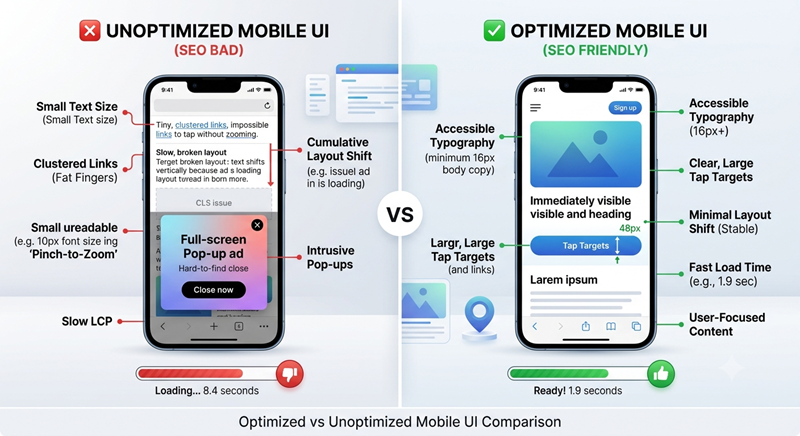
Here are some practical guidelines for balancing aesthetics with SEO performance.
Prioritize Above-the-Fold Optimization
Load only essential content immediately.
Delay secondary visuals until after the primary interface becomes interactive.
Reduce Unnecessary Design Layers
Too many overlays, shadows, textures, and visual effects increase rendering complexity.
Cleaner interfaces often perform better both visually and technically.
Audit Third-Party Scripts
Many visual effects depend on external plugins and libraries.
Regularly remove unused scripts and assets.
Test on Real Mobile Devices
Desktop previews rarely reflect actual mobile performance accurately.
Always test on:
- Mid-range Android devices
- Slower mobile networks
- Older smartphones
The SEO Impact of Poor Mobile Experience
Search engines increasingly evaluate real-world user satisfaction.
Even visually stunning websites can lose rankings if mobile usability suffers.
Common warning signs include:
- Slow page speed
- Delayed interaction
- Janky animations
- Layout instability
- Overloaded pages
This is why businesses focusing on long-term organic growth often invest in both technical optimization and modern seo strategies simultaneously.
Final Thoughts
Heavy gradients and advanced textures do not automatically hurt mobile SEO. The real issue is inefficient implementation.
Modern users expect websites that are both visually engaging and fast. Search engines now reward websites that deliver both experiences successfully.
Instead of removing advanced design entirely, focus on optimization:
- Compress assets properly
- Use efficient rendering techniques
- Simplify unnecessary effects
- Prioritize mobile performance early
- Monitor Core Web Vitals consistently
A visually impressive website should support usability, not slow it down. When design and SEO work together, businesses can achieve stronger rankings, better engagement, and higher conversions without sacrificing creativity.
FAQs
Does using gradients hurt SEO?
No. Properly optimized gradients usually have minimal SEO impact.
Are 3D effects bad for mobile websites?
Not always, but poorly optimized effects can slow performance significantly.
What matters most for mobile SEO?
Speed, responsiveness, usability, and Core Web Vitals are critical factors.
Should I remove animations completely?
No. Lightweight animations can improve user experience when used carefully.
Can design quality improve SEO indirectly?
Yes. Better design can increase engagement, reduce bounce rates, and improve conversions.