
 September 10, 2025
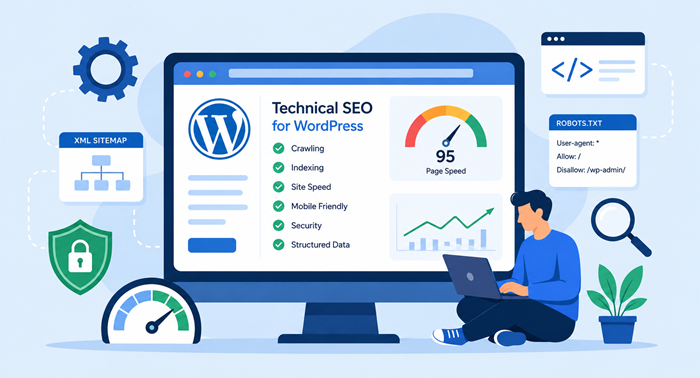
When people think of SEO, their minds often go straight to keywords or backlinks. While those matter, the real foundation lies deeper in the technical setup of your site. Without strong technical SEO, even the best-written content won’t rank the way it should. That’s where crawlability, indexing, and site architecture come in. They are the backbone of a website’s visibility, making sure search engines can discover, understand, and prioritize your content.
In this article, we’ll break down these core pillars, show why they matter in 2025, and give you practical steps to improve them while staying aligned with what technical SEO really is and why it’s important.
Why Technical SEO Matters
Imagine your website as a library. Content is the books, design is the layout, but technical SEO? That’s the cataloging system. Without it, visitors (and search engines) won’t know where to look. A well-structured, technically sound site ensures search engines can find and rank your pages effectively.
For a deeper dive, you can explore a full overview of technical SEO essentials.
Pillar 1: Crawlability
Crawlability refers to how easily search engine bots can explore your site. If they can’t navigate it, your content won’t even make it to the ranking stage.
Why Crawlability Matters
Search engines use crawlers to discover new pages and updates. If a crawler hits a dead end, like a broken link or blocked resource, it may skip crucial content.
How to Improve Crawlability
- Fix broken links: Ensure all internal and external links work properly.
- Optimize your robots.txt file: Don’t accidentally block important sections.
- Use clean, consistent URLs: Complicated URLs confuse both crawlers and users.
For more insights, check out how search engines crawl and index your site.
Pillar 2: Indexing
Even if crawlers find your content, it doesn’t guarantee it will appear in search results. That’s where indexing comes in—Google decides if your page is worth storing in its database.
Why Indexing Matters
If your content isn’t indexed, it’s invisible to searchers. Poor indexing often happens due to duplicate content, thin content, or technical errors like noindex tags in the wrong places.
How to Improve Indexing
- Submit an XML sitemap: This acts as a roadmap for search engines.
- Fix duplicate content issues: Use canonical tags to point to the original page.
- Improve page quality: Make sure each page offers unique value.
Understanding the relationship between crawling and indexing is a critical step in building an SEO campaign with real impact.
Pillar 3: Site Architecture
Site architecture is the way your pages are structured and connected. Think of it like the blueprint of a house—without it, the whole thing collapses.
Why Site Architecture Matters
Good architecture ensures both users and crawlers can easily find content. Poor structure leads to orphaned pages, confusing navigation, and lower rankings.
How to Improve Site Architecture
- Use a logical hierarchy: Group related pages under categories.
- Keep it shallow: Users and bots should reach any page within 3 clicks.
- Strengthen internal linking: Direct authority to your most important pages.
A well-planned site structure also strengthens brand trust. Learn more about how SEO and design work together to build brand authority.
Common Technical SEO Mistakes to Avoid
Even experienced site owners slip up. Here are mistakes that hurt crawlability, indexing, and architecture:
- Blocking crawlers from JavaScript or CSS files
- Forgetting mobile optimization (a major ranking factor in 2025)
- Overloading pages with redirects
- Poorly implemented hreflang tags for multilingual sites
The Role of Technical SEO in a Bigger Strategy
While technical SEO is foundational, it’s only one piece of the puzzle. Content strategy, backlinks, and user experience also play huge roles. Still, without a technically sound site, these efforts won’t reach their full potential. That’s why every serious marketer needs to master these pillars before anything else.
Practical Steps You Can Take Today
- Run a crawl audit with tools like Screaming Frog or Ahrefs.
- Fix broken links and redirects.
- Review your robots.txt and sitemap for errors.
- Reorganize site navigation if pages feel buried.
- Test mobile performance—Google prioritizes it heavily in rankings.
Conclusion
Technical SEO isn’t glamorous—it’s not about flashy content or viral campaigns. But it’s the silent powerhouse that makes everything else possible. If your site isn’t crawlable, search engines can’t find your content. If it isn’t indexed, it won’t show up in results. And without clear architecture, it won’t be understood. Together, these pillars form the backbone of a strong, sustainable SEO strategy.
Whether you’re optimizing for the first time or fine-tuning, think of technical SEO as the wiring behind the walls. Invisible? Maybe. But without it, the lights don’t turn on.