
 June 15, 2026
In today’s competitive digital landscape, having a beautiful website is no longer enough. Visitors expect pages to load almost instantly, and search engines reward websites that deliver fast, seamless experiences. This is why understanding the importance of site speed has become essential for businesses, marketers, and website owners alike.
A slow website can frustrate visitors, increase bounce rates, reduce conversions, and negatively affect search visibility. On the other hand, a fast-loading website improves user experience, keeps visitors engaged, and helps search engines better evaluate your content.
Whether you run an eCommerce store, a local business website, or a content-driven platform, improving site performance should be a top priority. In this guide, we’ll explore why speed matters, how it influences rankings and user behavior, and what you can do to create a faster website that delivers better results.
Understanding Site Speed and Why It Matters
Site speed refers to how quickly a webpage loads and becomes usable for visitors. It includes everything from server response times and image loading to rendering content and enabling user interactions.
When users click on a website, they expect information to appear immediately. Research consistently shows that even small delays can cause visitors to abandon a page before engaging with the content.
Fast websites create positive first impressions. They feel more professional, trustworthy, and reliable. In contrast, slow websites often create frustration and lead users to seek alternatives elsewhere.
The relationship between speed and online success is so significant that many businesses now invest heavily in performance improvements as part of their digital growth strategy.
How Site Speed Impacts User Experience
Faster Loading Creates Better First Impressions
Visitors form opinions about a website within seconds. If pages load quickly, users can immediately access the information they need.
A fast website reduces friction and encourages users to continue exploring multiple pages. This leads to higher engagement and a better overall experience.
Reduced Bounce Rates
When a website takes too long to load, visitors often leave before interacting with any content.
Fast-loading websites keep users engaged and increase the likelihood that they will stay longer, view additional pages, and complete desired actions.
Improved Mobile Browsing Experience
With mobile traffic accounting for a significant portion of web usage, performance on smartphones has become critical.
Businesses focusing on strong mobile seo performance often discover that faster websites deliver better engagement metrics and stronger search visibility across mobile devices.
The Connection Between Site Speed and Search Rankings
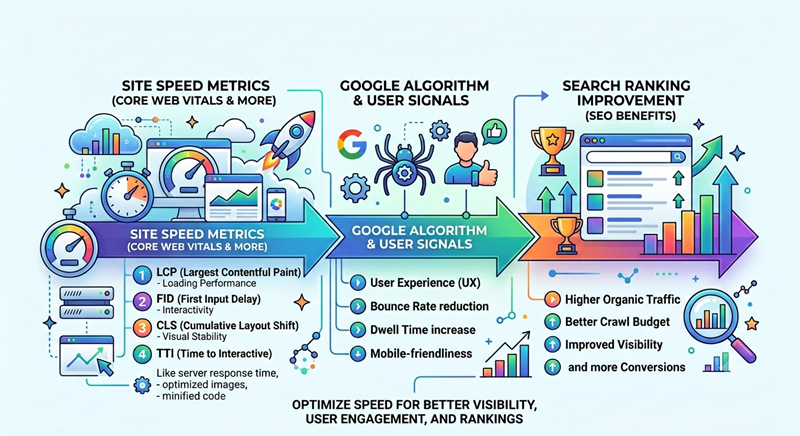
Search engines aim to provide the best possible experience for users. Because page performance directly affects user satisfaction, speed has become an important ranking consideration.
Google Prioritizes User Experience
Google evaluates multiple user experience signals when ranking websites. Fast-loading pages help search engines determine that visitors are receiving a quality experience.
This relationship highlights the importance of website speed for seo, making performance optimization an essential part of any long-term search strategy.
Core Web Vitals Influence Performance Signals
Google’s Core Web Vitals measure important aspects of page experience, including loading speed, visual stability, and interactivity.
Websites that perform well in these metrics often provide smoother experiences for users and may benefit from stronger search visibility over time.
Better Crawling and Indexing
Search engine bots have limited resources when crawling websites. Faster websites allow search engines to access and process more pages efficiently.
Improved crawl efficiency can help ensure that important content gets indexed and discovered more quickly.
How Site Speed Affects Conversions and Revenue
Website performance doesn’t only influence rankings—it directly impacts business results.
Faster Sites Generate More Leads
Visitors are more likely to fill out forms, request quotes, subscribe to newsletters, or contact a business when the browsing experience feels smooth and responsive.
Even minor improvements in loading times can have measurable effects on conversion rates.
Better eCommerce Performance
Online shoppers expect instant access to products, categories, and checkout processes.
Slow-loading product pages often result in abandoned carts and lost sales opportunities. Faster websites create a more enjoyable shopping experience and improve customer satisfaction.
Increased Customer Trust
Website speed contributes to perceived professionalism.
Users often associate fast-loading websites with reputable businesses, while slow websites can unintentionally damage credibility.
Common Factors That Slow Down Websites
Understanding the causes of slow performance is the first step toward improvement.
Large and Unoptimized Images
High-resolution images can dramatically increase page weight and loading times.
Implementing optimization graphics for better lcp speed can significantly reduce load times while maintaining visual quality.
Inefficient Image Formats
Traditional image formats often consume more bandwidth than necessary.
Many modern websites now compare avif vs webp to determine the best solution for delivering lightweight, high-quality visuals.
Excessive Scripts and Plugins
Third-party scripts, tracking tools, and unnecessary plugins can increase page complexity.
Regular audits help identify assets that slow down performance without providing meaningful value.
Poor Hosting Infrastructure
Hosting quality plays a major role in website responsiveness.
A slow server can create delays before a page even begins loading, making reliable hosting a critical component of overall performance.
Practical Strategies to Improve Site Performance
Optimize Images
Compress images before uploading them and use modern formats when appropriate.
Reducing image file sizes often delivers some of the fastest and most noticeable performance gains.
Enable Caching
Caching stores frequently accessed resources so they can load more quickly for returning visitors.
This reduces server workload and improves page delivery speed.
Minimize Code
Removing unnecessary code, comments, and unused scripts can significantly reduce page size.
Cleaner code allows browsers to process pages more efficiently.
Use a Content Delivery Network (CDN)
A CDN distributes website assets across multiple servers around the world.
This allows visitors to access content from locations closer to them, improving load times and reliability.
Invest in Technical Optimization
Many businesses achieve substantial performance improvements by implementing professional technical seo services that address underlying issues affecting crawlability, speed, and overall site health.
Measuring Site Performance Effectively
Optimization begins with accurate measurement.
Running a website speed test allows website owners to identify bottlenecks and prioritize improvements based on real performance data.
Several website speed test tools provide valuable insights into loading times, Core Web Vitals, resource usage, and user experience metrics.
Regular testing helps ensure performance remains consistent as new content, features, and updates are added.
Site Speed and Long-Term SEO Growth
Performance optimization should not be treated as a one-time task.
Websites evolve continuously through content updates, design changes, plugin installations, and new functionality. Without ongoing monitoring, performance can gradually decline.
Strong website speed seo practices involve routine audits, technical maintenance, image optimization, and infrastructure improvements.
Businesses that consistently prioritize performance often experience stronger rankings, better engagement metrics, and improved conversion rates over time.
Why Modern Businesses Can’t Ignore Speed
The modern web is highly competitive. Users have endless alternatives available with a single click.
A slow website risks losing traffic, leads, and revenue to faster competitors. Businesses that invest in strong digital foundations, including professional unlimited web design solutions, are often better positioned to deliver fast, user-friendly experiences that keep visitors engaged. Conversely, a high-performing website creates a smoother experience that benefits visitors, search engines, and business goals alike.
Companies investing in website speed optimization are not simply making technical improvements—they are creating better user experiences that support sustainable growth.
Whether your goal is increasing organic traffic, improving conversions, or strengthening brand credibility, site speed remains one of the most valuable areas for ongoing investment.
Conclusion
The importance of site speed extends far beyond technical performance. It influences user satisfaction, search visibility, conversion rates, and overall business success.
Fast websites keep visitors engaged, improve search engine performance, and create stronger opportunities for growth. By optimizing images, reducing unnecessary code, improving hosting infrastructure, and maintaining a performance-focused mindset, businesses can gain a meaningful competitive advantage.
As user expectations continue to rise, website performance will remain a critical factor in determining which websites succeed online. Prioritizing speed today helps build a stronger, more effective digital presence for the future.
FAQs
Does site speed affect SEO rankings?
Yes, faster websites provide better user experiences and can contribute to stronger search visibility.
What is considered a good page load time?
Generally, pages should load in under three seconds for the best user experience.
Why do images slow down websites?
Large image files increase page size and require more time to download and display.
How often should website speed be tested?
Monthly testing is recommended, along with checks after major website updates.
Can a slow website reduce conversions?
Yes, slow-loading pages often increase abandonment rates and lower conversion opportunities.