
 September 30, 2025
Starting a business is thrilling, but that initial tech decision—web development or a mobile app—can feel like a high-stakes gamble. As a founder, you’re juggling a limited budget, a tight timeline, and the immense pressure to get your Minimum Viable Product (MVP) to market fast. I’ve seen countless startups hit a wall because they chose the wrong starting line. It’s not about which technology is “better” overall; it’s about which one is the right fit for your unique business goals, budget, and, most importantly, your users.
Let’s cut through the tech jargon and look at this through a purely strategic, human lens. We’ll explore the real-world trade-offs in cost, speed, and user engagement, ensuring your decision aligns with the latest digital trends and sets you up for long-term success.
The Startup MVP: Speed and Cost as Your Allies
For any nascent company, the Minimum Viable Product (MVP) is the first step toward validating your idea. It’s a lean, mean testing machine. Your goal here isn’t perfection; it’s rapid deployment and user feedback. When evaluating web versus mobile for an MVP, two factors reign supreme: cost and time-to-market.
Web Development: The Agile, Cost-Effective Foundation
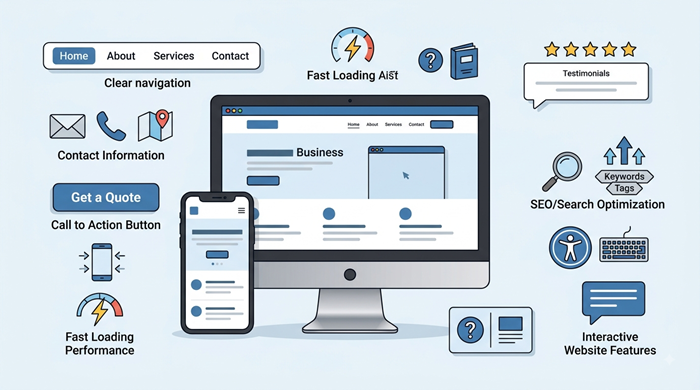
Choosing a web application—a platform accessible via any standard browser—is, nine times out of ten, the most cost-effective and fastest way to launch your MVP.
- Single Codebase, Universal Reach: You build one version that works across all operating systems (Windows, macOS, iOS, Android), eliminating the need for separate, expensive development teams. This significantly reduces your initial development investment.
- Faster Deployment and Iteration: There’s no waiting for app store reviews. You can push updates, bug fixes, and new features instantly, allowing you to iterate on user feedback almost in real-time. This agility is crucial when you are still trying to find product-market fit.
- SEO and Discoverability: A web application is inherently more discoverable. Google and other search engines index web content, meaning users can find you organically through a simple search. This organic traffic is a key asset for early-stage startups who need to build an audience without a huge advertising spend.
Think of web development as building a fantastic, widely accessible storefront on the busiest street on the internet. For many businesses, particularly SaaS platforms (Software as a Service), informational sites, and initial e-commerce portals, starting with the web is a no-brainer. If you’re looking to build out a comprehensive, end-to-end platform, a full-stack development approach for your web app can provide the necessary flexibility and control over both the user-facing and back-end logic. For more on structuring that process, check out our guide on full-stack development: how to build a complete web app.
The Mobile App Advantage: Deep Engagement and Native Features
Now, let’s look at the times when a mobile app, despite the higher initial cost and slower deployment cycle, is the indispensable choice. Mobile applications—native apps built for iOS (Swift/Kotlin) or Android (Java/Kotlin), or cross-platform solutions like React Native—excel at deep user engagement and leveraging device hardware.
When Your Core Value is Device-Dependent
If your startup’s core functionality relies on specific device features, a native mobile app is your only real option. These features include:
- GPS and Location Services: Think ride-sharing, food delivery, or real-time local discovery.
- Camera and AR/VR: For social media filters, complex photo editing, or augmented reality tools.
- Biometric Sensors: Fingerprint or Face ID authentication for high-security applications like banking.
- Offline Functionality: Apps that must work reliably without an internet connection, such as specialized mapping or data collection tools.
The Power of Push Notifications
Mobile apps offer direct user engagement through push notifications. Unlike browser-based notifications, which can be inconsistent, app-based push alerts are a powerful tool for:
- Driving immediate action: “Your order has arrived.”
- Re-engaging dormant users: “We missed you! Here’s 10% off your next purchase.”
This level of direct, persistent access to your user’s pocket is what drives the significantly higher time-in-app metrics.
The Critical Crossroads: The User Experience (UX) Test
Beyond cost and features, the final, human decision point is the User Experience (UX). A modern, engaging user experience is key to meeting Google’s guidelines. Your content and platform must be reliable, expertly presented, and offer a genuinely helpful experience to users.
Ask yourself: How will users primarily interact with my product?
Scenario A: Content Consumption and Simple Tools
If your user’s primary activity is reading, browsing, or using simple administrative dashboards, a highly optimized web application is likely sufficient. Users want to quickly access your information without downloading anything new. Furthermore, you can leverage robust, accessible platforms like Unlimited WordPress Development to rapidly deploy and manage content-heavy sites with unparalleled ease.
Scenario B: Habitual Use and Complex Interaction
If your goal is to be a part of a user’s daily habit—think social media, messaging, or complex utility tools used multiple times a day—the superior performance and native UX of a mobile app win out. Mobile apps provide the buttery-smooth scrolling, intuitive gestures, and speed that users expect from a habitual tool.
The Best of Both Worlds: Progressive Web Apps (PWAs)
For startups that want the speed and reach of the web but need the app-like experience of mobile, Progressive Web Apps (PWAs) offer a compelling middle ground.
PWAs are essentially web apps that leverage modern browser capabilities to offer features previously exclusive to mobile apps, such as:
- Offline access.
- Fast load times.
- The ability to be “installed” to the user’s home screen.
They bridge the gap beautifully, offering a smoother transition to a mobile-first experience without the overhead of native development. For a deeper dive into this hybrid approach, learn why progressive web apps (PWAs) are still relevant for today’s market.
Future-Proofing Your Decision: The AI and Development Landscape
The technology landscape is always shifting, and your decision must account for modern trends.
- The Rise of AI in Development: The integration of AI is making both web and mobile development faster and more efficient, but it doesn’t fundamentally change the core decision. AI assists developers in writing cleaner code and automating tasks, but the architectural choice (web vs. mobile) remains a strategic one. Keeping up with how AI is transforming web development is essential for all startup founders, regardless of their platform choice.
- The Scalability Question: Whichever path you choose, scalability must be baked in from the beginning. A poorly architected MVP on either platform will fail when user numbers spike. Whether it’s the backend of your web app or the server-side logic for your mobile app, ensure your chosen technology stack can handle growth without a complete overhaul.
Final Decision Framework for Founders
Choosing your platform isn’t about guesswork; it’s a calculated risk based on honest self-assessment.
| Consideration | Choose Web Development if… | Choose Mobile App Development if… |
| Budget & Time | You need to launch an MVP in 3-4 months and have a limited starting budget. | Your idea is heavily funded, and the time-to-market can be 6+ months. |
| Core Functionality | Your product is a content platform, informational site, or internal SaaS dashboard. | Your product relies on GPS, camera/mic, or biometric security. |
| Target User | You need maximum reach across all devices, including desktop users. | Your user will interact with the product habitually (multiple times daily). |
| Engagement | You are focused on organic search traffic and simple customer communication. | You need to use push notifications as a core feature for instant re-engagement. |
| MVP Focus | You need to validate a concept with the widest possible audience quickly. | You need to validate a specific hardware-dependent feature or a superior, native UX. |
Ultimately, the best path for your startup is the one that allows you to validate your core value proposition with the maximum number of users in the shortest amount of time and for the least cost. For many, that initial step will be the web. But for those building the next generation of mobile-first experiences, the native app is the only way to deliver the magic. Choose wisely, build quickly, and listen closely to your early users—that’s the real secret to tech-driven startup success.