
 September 25, 2026
A successful landing page design does more than make a business look professional. It guides visitors toward one clear action, answers important questions quickly, establishes trust, and removes unnecessary friction from the customer journey. Google Analytics defines a landing page as the first page a visitor sees when arriving at a website, making that first interaction an important part of understanding website performance.
Creating an effective page requires more than choosing attractive colors or placing a prominent button above the fold. Strong landing page design combines messaging, visual hierarchy, user experience, mobile usability, persuasive content, and measurable conversion goals into one focused experience.
Key Takeaways
- Landing page design should support one primary conversion goal and make the next step obvious.
- Strong headlines, relevant content, trust signals, and clear CTAs reduce friction for visitors.
- Mobile performance, forms, page structure, and visual hierarchy directly affect the user experience.
- Continuous testing and analytics help identify what needs improvement over time.
What Makes Landing Page Design Effective?
The foundation of effective landing page design is clarity. A visitor should understand what the page offers, who it is for, and what action to take without having to search through unnecessary content.
Unlike a general website page, a focused landing page usually has a specific purpose. That purpose might be generating leads, booking consultations, requesting a quote, downloading a resource, registering for an event, or encouraging a purchase.
Google Analytics also allows businesses to analyze which pages visitors first reach and examine their performance using metrics such as users, sessions, and key events.
Start With One Conversion Goal
Before designing the page, define the action that matters most.
A lead-generation page might focus on form submissions. A service page may encourage quote requests. A campaign page could drive registrations or purchases.
Multiple secondary actions can create distractions when they compete with the main objective. Keep navigation, supporting links, and additional content purposeful rather than allowing them to dominate the page.
Understand Your Audience Before Designing
Effective landing page design starts with understanding the visitor rather than starting with colors, fonts, or graphics.
Consider what brought the visitor to the page. Someone arriving from a paid advertisement may have a different expectation from someone discovering a service through organic search.
The message should match that intent.
For example, a visitor searching for a residential roofing service may want pricing information, service details, proof of previous work, and an easy way to request an estimate. A software buyer may need product benefits, demonstrations, integrations, and security information.
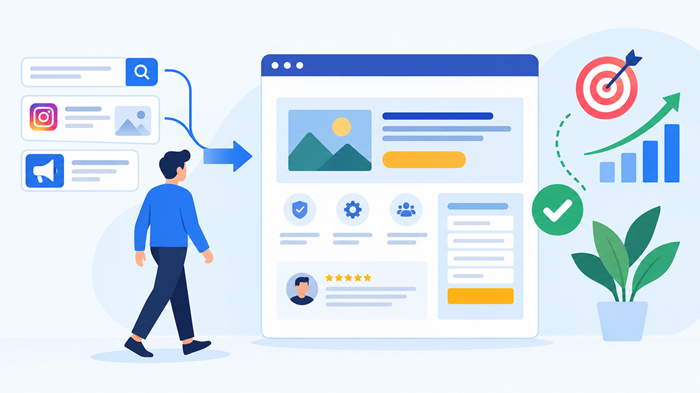
This is also where how to build a seamless visual experience that carries users from a social post or advertisement into the destination page becomes especially relevant. Consistency between the original message and the destination reduces confusion.
Create a Clear Value Proposition
A strong value proposition tells visitors why the offer matters.
Good landing page design places this information where visitors can find it quickly, usually within the hero section. The headline should communicate the primary benefit, while the supporting copy adds enough context to make the offer understandable.
Avoid vague statements such as “We Deliver Excellence” when a more specific benefit is available.
Instead, explain what the customer receives, who it helps, and why the solution is relevant.
Build a Strong Hero Section
The hero section is often the first major visual area visitors encounter. It should contain three core elements:
- A concise, benefit-focused headline
- Supporting copy that explains the offer
- A prominent call-to-action
An image, product demonstration, illustration, or short video can support the message, but visual elements should not overpower the primary action.
A high-converting landing page makes the next step visually obvious without making the visitor feel pressured.
Use Visual Hierarchy to Guide Attention
Strong landing page design creates a visual path that naturally moves visitors through the page.
Typography, spacing, headings, buttons, images, and content blocks should establish an order of importance. Visitors should immediately recognize the headline, understand the supporting message, identify evidence of credibility, and see the next step.
This principle is closely connected to conversion psychology. For a deeper explanation, the psychological principles that influence conversion-focused experiences can help explain why hierarchy, contrast, relevance, and perceived value matter.
Keep the Layout Easy to Scan
Large blocks of text can make a page feel difficult to navigate. Break information into short sections with descriptive headings, concise paragraphs, bullet points, and visual breaks.
Every section should answer a question or address a concern.
A useful structure might look like this:
- Value proposition
- Primary CTA
- Benefits
- Product or service explanation
- Social proof
- Objection handling
- Secondary CTA
- FAQ
This structure can be adapted according to the audience and conversion goal.
Write Copy That Supports the Design
Good landing page design cannot compensate for unclear or irrelevant copy.
The words on the page need to reinforce the visitor’s intent. Focus on benefits rather than filling the page with features that lack context.
Instead of simply saying a service has “advanced technology,” explain what that technology means for the customer.
Does it save time? Reduce complexity? Improve accuracy? Make the process easier?
Specific language helps visitors understand the practical value of the offer.
Match Message to Traffic Source
Consistency between the advertisement, search result, social post, and landing page is essential.
A visitor who clicks an advertisement promising a specific service should arrive on a page that immediately addresses that same service.
This is particularly important for paid campaigns. Google Analytics notes that landing-page tracking and URL behavior can affect how campaign information is recorded, so technical tracking should be checked alongside the visible page experience.
For businesses running social campaigns, how to align your campaign pages with current social behavior to improve engagement provides another useful perspective.
Make the Call-to-Action Impossible to Miss
A CTA is one of the most important components of landing page design.
The wording should describe the action clearly. “Get Your Free Quote,” “Book a Consultation,” “Start Your Trial,” and “Request Pricing” communicate more information than a generic “Submit” button.
Placement also matters.
A CTA can appear in the hero section and return at logical points throughout a longer page. Repeating the same primary action is often more useful than introducing multiple competing actions.
Reduce Friction Around Forms
Forms should request information that genuinely helps move the customer journey forward.
A long form can create hesitation, especially when visitors are still evaluating an offer. Start with essential information and explain what happens after submission.
For lead generation, Google Analytics specifically recommends measuring how many visitors reach, start, and submit forms so businesses can understand where users drop out.
Build Trust Before Asking for Action
Visitors often need reassurance before submitting personal information or making a purchase.
Effective landing page design uses trust signals such as:
- Customer testimonials
- Case studies
- Client logos
- Reviews and ratings
- Certifications
- Guarantees
- Security information
- Relevant statistics
- Before-and-after examples
The strongest trust elements are specific and relevant.
A testimonial that describes a real outcome is generally more informative than a generic statement saying a company is “the best.”
Design for Mobile Visitors
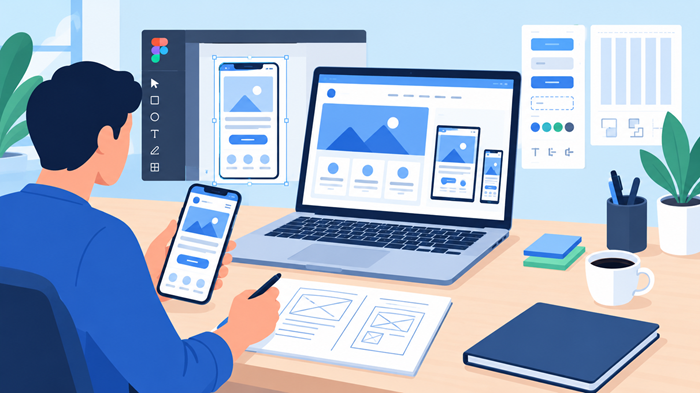
Mobile responsiveness should be considered from the beginning, not added as a final adjustment.
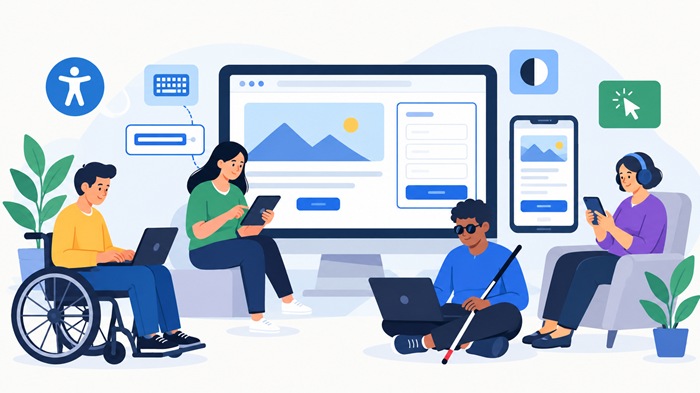
Buttons need sufficient space for touch interaction. Text should remain comfortable to read. Images should scale properly, forms should work smoothly, and important content should not become difficult to access on smaller screens.
A polished desktop layout can still produce a poor experience when mobile visitors encounter oversized images, tiny text, awkward spacing, or slow-loading assets.
Responsive design should therefore be part of the initial planning process.
Choose the Right Page Structure
Different businesses need different structures. A local service company may benefit from a direct lead-generation layout, while a SaaS company may require product demonstrations and feature comparisons.
Understanding the most effective landing page layouts for residential service businesses can be particularly useful when designing pages for home-service industries.
The important principle is relevance.
Do not copy a layout simply because it worked for another company. Adapt the structure to the audience, offer, buying process, and amount of information visitors need before taking action.
Use High-Quality Visuals With Purpose
Visual content should reinforce the message rather than simply decorate the page.
Product screenshots can demonstrate software. Service photographs can show completed work. Diagrams can explain complex processes. Short videos can demonstrate how a product operates.
A useful image should answer a question, establish credibility, demonstrate an outcome, or help visitors understand the offer.
Avoid stock imagery that has little connection to the business. Authentic visuals generally provide more context and make the page feel more specific.
Consider Professional Landing Page Design Services
Businesses with complex campaigns or multiple conversion goals may benefit from professional landing page design services.
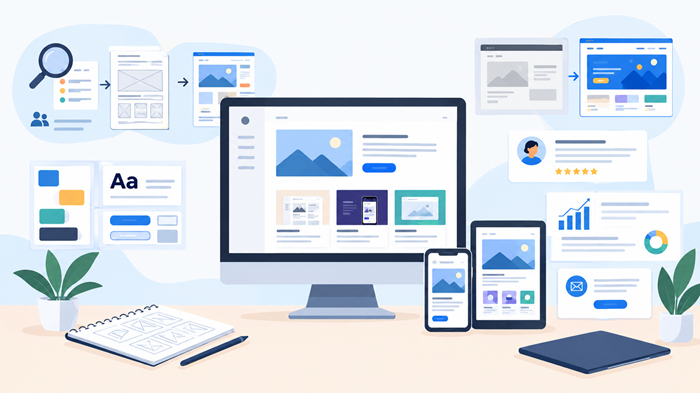
A specialist can evaluate information architecture, responsive layouts, conversion paths, visual consistency, messaging, forms, and tracking requirements as one connected system.
A professional landing page design agency can also help create reusable systems for campaigns instead of treating every page as an isolated project.
The objective is not simply to produce a visually attractive page. The objective is to create an experience that supports measurable business outcomes.
Use Templates Carefully
Templates can accelerate the early stages of a project, especially when a team needs to launch quickly.
However, generic structures can become limiting when the business has a distinctive audience, complex offer, or specific brand requirements.
Rather than relying entirely on high-converting landing page templates, use proven structural principles while customizing the content, hierarchy, visuals, and conversion path around the actual customer journey.
That approach creates a more relevant experience without forcing every business into the same visual formula.
Test and Improve the Page
Great landing page design is not a one-time project.
A page can look successful while still losing potential customers at specific points in the journey. Analytics can reveal which landing pages receive traffic, how users interact with them, and where important actions occur.
Google Analytics describes key events as actions important to a business’s success, such as meaningful interactions that can be used to understand and improve website experiences.
Test meaningful variables such as:
- Headlines
- CTA wording
- Form length
- Page structure
- Supporting images
- Testimonials
- Offer presentation
- Pricing information
Change one major variable at a time where practical so the results are easier to interpret.
Measure More Than Conversion Rate
A conversion rate provides useful information, but it should not be viewed in isolation.
Review traffic sources, engagement, form starts, form completions, page exits, device categories, and the quality of resulting leads.
A page that produces more form submissions is not necessarily creating better business results when those leads have poor relevance.
The best measurement framework connects page behavior with actual business outcomes.
Where Ducky Unlimited Fits Into the Process
A thoughtful landing page design strategy benefits from having design, user experience, branding, and ongoing website improvements work together.
Ducky Unlimited has published guidance around conversion-focused websites, emphasizing clear messaging, usability, visual structure, and business outcomes rather than aesthetics alone.
We are providing an unlimited web design approach that can be useful for businesses that need continuing design support rather than a single isolated website project.
That broader web design experience can help businesses maintain consistency between landing pages, their main website, campaign assets, and future updates.
Final Thoughts
Effective landing page design is ultimately about helping the right visitor make the right next decision with as little unnecessary friction as possible.
Start with a clear conversion goal, understand the audience, create a compelling value proposition, build a logical visual hierarchy, strengthen trust, simplify forms, and make the experience work smoothly across devices.
From there, use analytics and testing to keep improving the experience.
The best landing page design is not necessarily the most elaborate. It is the one that communicates value clearly, supports the customer’s journey, and gives the business reliable information about what is working.
For a practical resource on improving conversion-focused pages, explore landing page design that converts for additional strategies around CTAs, trust signals, mobile responsiveness, testing, and form optimization.
Frequently Asked Questions
1. What is a high-converting landing page?
A high-converting landing page clearly communicates value, builds trust, and guides visitors toward one primary action.
2. What should a landing page include?
A landing page should typically include a strong headline, supporting copy, benefits, relevant visuals, trust signals, and a clear CTA.
3. How long should a landing page be?
The ideal length depends on audience intent, offer complexity, and how much information visitors need before taking action.
4. How can landing page performance be measured?
Performance can be measured through traffic, engagement, form interactions, key events, conversions, and resulting business outcomes.
5. Should landing pages be optimized for mobile?
Yes, responsive mobile experiences are essential because visitors increasingly access websites through smartphones and other smaller-screen devices.