
 June 10, 2026
When an online store struggles to convert visitors into customers, most business owners look at pricing, product selection, or marketing campaigns. Yet many overlook a critical factor that affects every visitor before they even see a product page: site performance.
A slow-loading store creates friction from the very first click. Customers become impatient, trust declines, and many leave before engaging with your products. The result is lost revenue that often goes unnoticed.
This is where Core Web Vitals come into the picture. These performance metrics measure how quickly and smoothly users experience your website. For online retailers, improving these signals isn’t just about rankings—it directly influences sales, customer satisfaction, and long-term growth.
In this guide, we’ll explore why poor performance can silently cost online stores a significant portion of potential revenue and what you can do to fix it.
What Are Core Web Vitals?
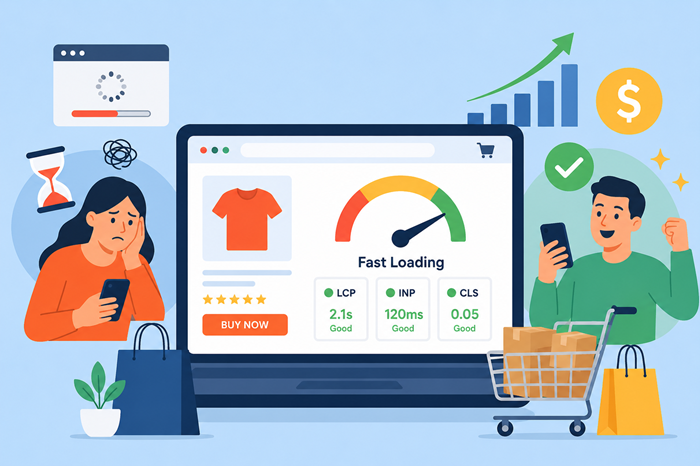
Core Web Vitals are a set of performance metrics developed by Google to evaluate real-world user experience. They focus on three key areas:
Largest Contentful Paint (LCP)
LCP measures how long it takes for the main content of a page to become visible. A slow LCP creates the impression that a page is unresponsive.
Interaction to Next Paint (INP)
INP measures how quickly a website responds when users click, tap, or interact with page elements.
Cumulative Layout Shift (CLS)
CLS evaluates visual stability. Unexpected movement of buttons, images, or content can frustrate users and cause accidental clicks.
Together, these metrics provide a reliable picture of how visitors experience your website from the moment they arrive.
Why Site Speed Matters Before a Product Page Loads
Customers make judgments quickly.
Before they evaluate product quality, compare prices, or read reviews, they form an opinion based on how your website feels. If pages load slowly or elements jump around unexpectedly, visitors may assume the business itself is unreliable.
This is particularly important in competitive retail markets where shoppers have endless alternatives just one click away.
Many retailers focus heavily on advertising budgets while neglecting performance optimization. Yet even a perfectly targeted campaign can fail if users encounter delays immediately after clicking an ad.
Running a regular website speed test helps identify performance bottlenecks before they impact conversions.
The Direct Connection Between Performance and Revenue
Every second of delay affects user behavior.
Research consistently shows that slower websites experience:
- Higher bounce rates
- Lower engagement
- Reduced product page views
- Decreased checkout completion rates
- Lower customer satisfaction
When visitors leave before interacting with products, businesses lose opportunities that marketing teams have already paid to acquire.
For online stores, speed improvements often generate measurable gains in conversion rates without increasing advertising spend.
How Core Web Vitals Influence Search Visibility
Search engines aim to provide users with the best possible experience. Performance signals help determine whether a page delivers that experience effectively.
Strong core web vitals seo performance can support broader search visibility efforts by improving user satisfaction and reducing friction throughout the customer journey.
Performance improvements also strengthen broader e-commerce seo efforts by helping search engines identify websites that provide a better overall user experience for shoppers.
While content quality and relevance remain essential ranking factors, user experience increasingly plays an important supporting role.
Businesses investing in performance improvements often benefit from both enhanced usability and stronger organic visibility.
Common Reasons E-Commerce Stores Underperform
Many online stores share similar technical issues that negatively impact performance.
Oversized Images
High-quality visuals are essential for selling products online, but unoptimized images frequently become the largest contributor to slow load times.
Store owners should learn how to optimize graphics for lcp speed to ensure product imagery enhances rather than hurts performance.
Excessive Third-Party Scripts
Marketing tools, analytics platforms, chat widgets, and tracking software often accumulate over time.
Each additional script increases browser workload and can delay page rendering.
Heavy Themes and Templates
Feature-rich website themes may appear attractive but often include unnecessary code that slows page delivery.
Many businesses discover that a modern, streamlined design delivers better performance than a visually complex alternative.
Poor Server Performance
Slow hosting infrastructure can create delays regardless of how well the front end is optimized.
Fast, reliable hosting provides the foundation for a strong user experience.
The Impact on Mobile Shoppers
Mobile commerce continues to dominate online purchasing behavior.
Unfortunately, mobile users are often more affected by performance issues because they rely on varying network conditions and device capabilities.
A desktop page that feels reasonably fast can become frustratingly slow on a smartphone.
Since mobile users frequently browse while multitasking, even minor delays can result in abandonment.
For every online retailer, mobile optimization should be treated as a revenue priority rather than a technical afterthought. A modern e-commerce website must deliver a fast and seamless experience across all devices to meet customer expectations.
Why Visual Design Must Balance Speed
Beautiful websites attract attention, but visual quality should never come at the expense of usability.
Many businesses fall into the common speed trap with heavy graphics that increase loading times without significantly improving conversions.
The most effective online stores balance aesthetics, performance, and functionality to create a seamless shopping experience.
This balance becomes increasingly important as customer expectations continue to rise.
Key Strategies to Improve Core Web Vitals
Improving performance doesn’t always require a complete redesign. Strategic optimizations can often produce substantial results.
Compress and Optimize Media Assets
Images, videos, and visual elements should be properly compressed before publication.
Modern image formats and responsive delivery methods help reduce page weight while maintaining visual quality.
Reduce Unnecessary JavaScript
Audit all scripts regularly.
Remove tools that no longer serve a clear business purpose and delay non-critical resources whenever possible.
Improve Caching
Browser caching allows returning visitors to load pages more quickly.
Effective caching strategies reduce server requests and improve overall responsiveness.
Upgrade Hosting Infrastructure
As traffic grows, hosting requirements change.
Scalable infrastructure helps ensure consistent performance during promotional periods and seasonal demand spikes.
Monitor Performance Consistently
Optimization is not a one-time project.
A regular google website speed test provides visibility into performance trends and helps identify emerging issues before they affect customers.
Technical SEO and Performance Work Together
Performance optimization and search optimization should never be treated as separate initiatives.
Strong technical foundations support crawling, indexing, user experience, and conversion performance simultaneously.
Businesses seeking long-term growth often benefit from investing in a dedicated technical seo service that addresses both performance and search visibility challenges.
When these efforts align, the results tend to be more sustainable and impactful.
Performance Optimization for Growing Online Stores
As an e-commerce business scales, performance demands become more complex.
Additional product pages, marketing integrations, inventory systems, and customer features can gradually slow the website.
This is why successful brands continuously evaluate their infrastructure and optimization strategies rather than waiting for performance problems to become severe.
Advanced teams often incorporate proven technical seo tactics into their broader growth strategy to maintain efficiency while expanding operations.
A proactive approach helps prevent performance degradation as the business grows.
Building a Faster Customer Experience
Website speed optimization should be viewed as a customer experience initiative rather than a purely technical task.
Every improvement contributes to a smoother journey:
- Faster landing pages
- Quicker product discovery
- Better browsing experience
- Improved checkout flow
- Higher customer confidence
When visitors encounter fewer obstacles, they are more likely to complete purchases and return in the future.
Companies investing in performance frequently discover that customer satisfaction improves alongside conversion metrics.
The Role of Website Design in Performance
Modern website design is about more than appearance.
A well-structured website combines clean code, optimized assets, intuitive navigation, and strong performance fundamentals.
Businesses looking to improve both user experience and conversion outcomes often benefit from working with specialists in unlimited web design who understand how aesthetics and performance must work together.
The best-performing websites create experiences that feel effortless from the first interaction to the final purchase.
Conclusion
Many online retailers focus on improving products, pricing, and marketing while overlooking the performance issues that drive customers away before a page fully loads.
Core Web Vitals provide valuable insight into how real users experience your website. When these metrics suffer, conversions, engagement, and revenue often suffer as well.
The good news is that performance improvements are among the most measurable optimizations available. Faster loading times, smoother interactions, and greater visual stability can positively influence both customer behavior and business results.
If your online store isn’t converting as expected, the problem may not be your products or marketing strategy. It could be the experience customers encounter before they even have a chance to browse.
Frequently Asked Questions
What are Core Web Vitals?
Core Web Vitals are Google performance metrics that measure loading speed, responsiveness, and visual stability.
Why do Core Web Vitals matter for online stores?
They directly affect user experience, engagement, and conversion rates.
How often should I test website performance?
At least monthly and after major website updates.
Can slow pages impact search rankings?
Yes, poor user experience signals can negatively affect search visibility.
What is the fastest way to improve page speed?
Optimizing images and reducing unnecessary scripts usually delivers quick gains.